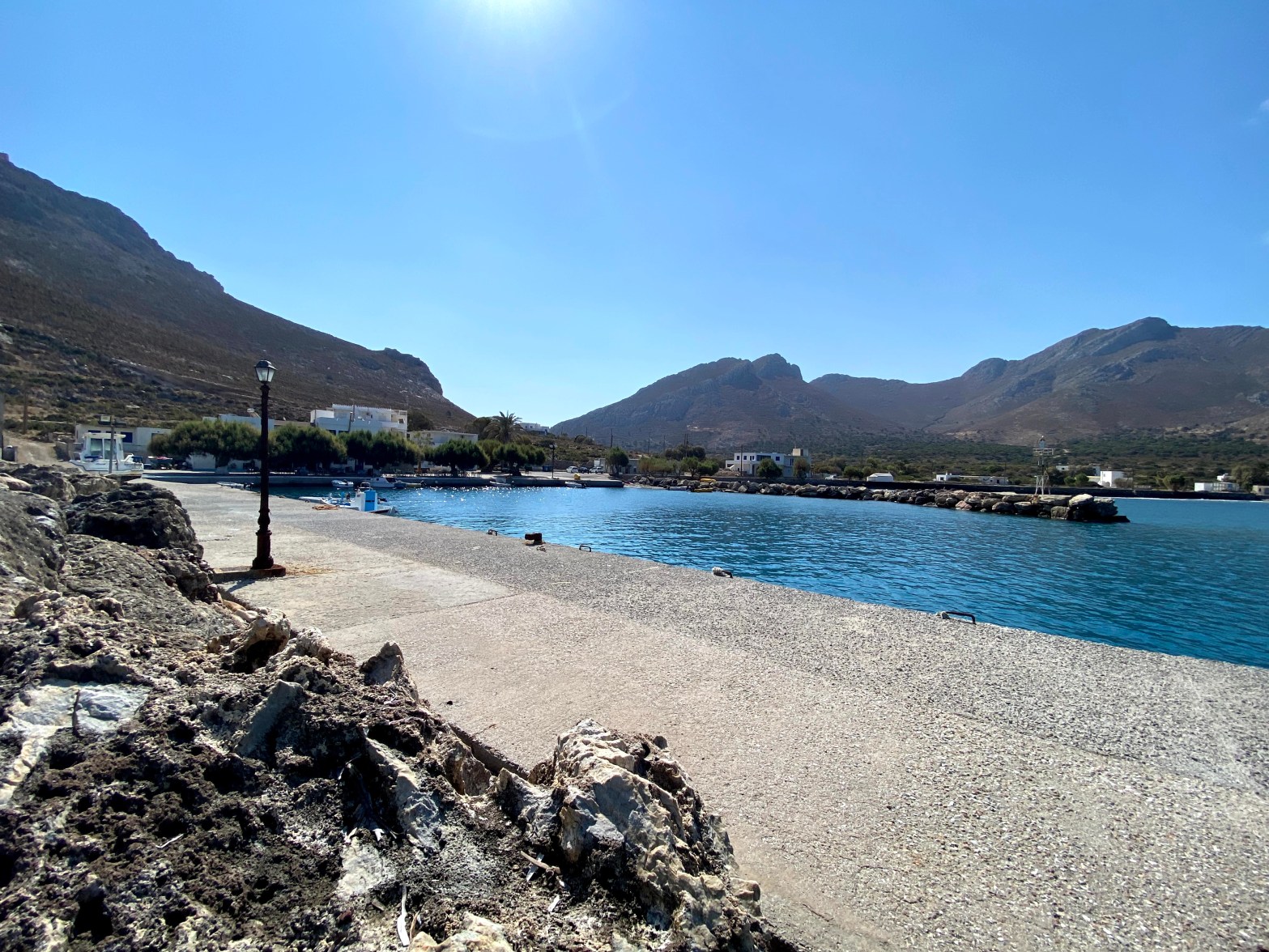
Tilos is a very small island, just over 64 square-km. Last population I could find was 880. We are nestled in the main port on the island where the ferries dock (I’m surprised how many ferries there are for such a small place…..I would guess 3 or 4 visits a week). Today we decided to take the local bus to the ‘big town’ (magalo horio). We managed to go past the ‘big town’, and what we went past proved to me that everything is relative because the ‘big town’ seemed to be a dozen or so houses around a grocery store through a street so narrow that the bus barely fit. There is also a small town (micro horio) that we must have gone through and didn’t notice. The bus took us to a beach that looked deserted except for some signs (Stop Camping!), and Victoria asked the old lady behind us about the spot, and she told us to stay on the bus with her as where she was going was better and had a cafe for food…..so we stayed. The old lady gave Victoria a great history of the island which was very interesting (Victoria being my personal Greek translator).
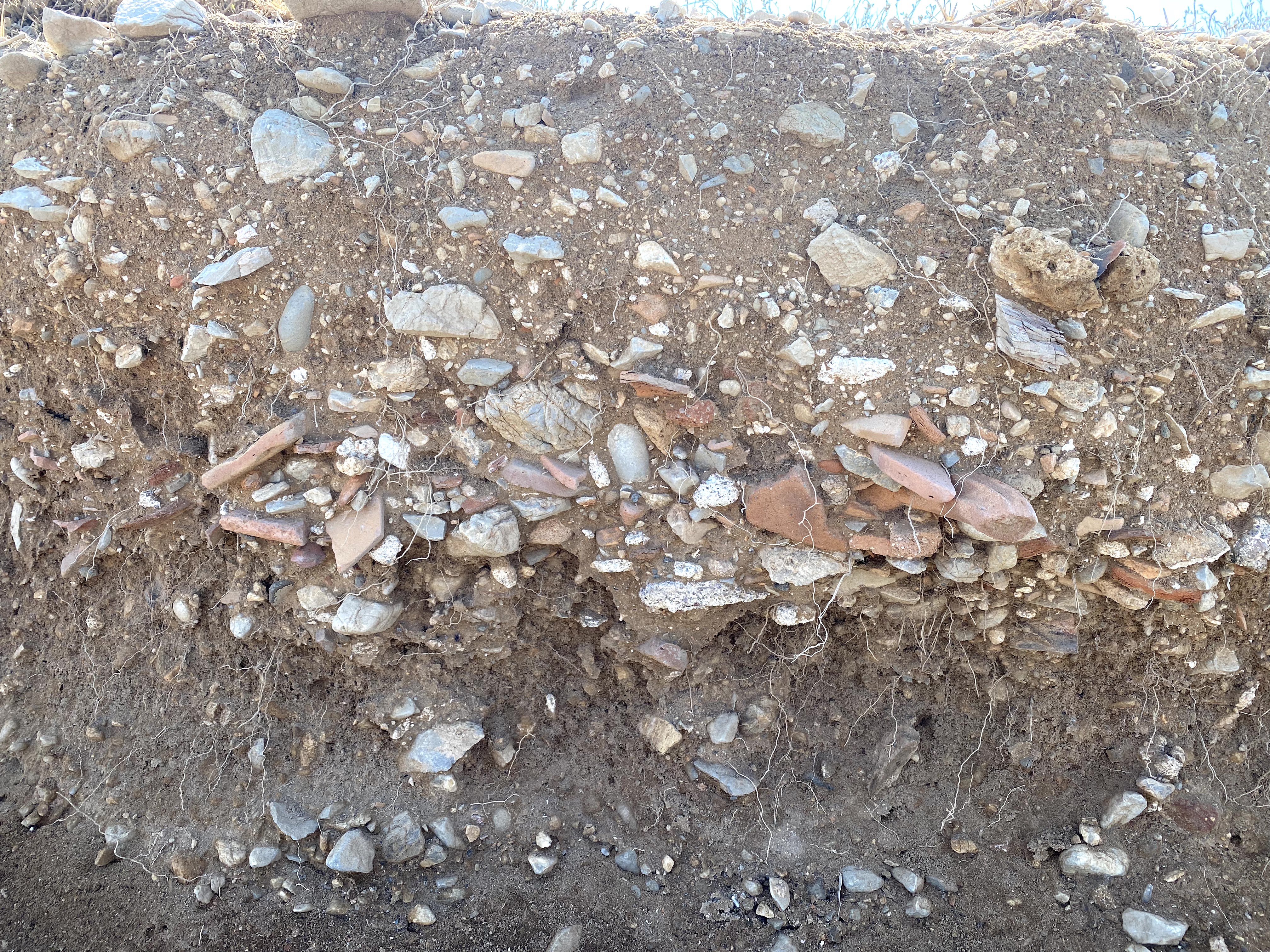
Some Tilos facts: People have lived in Tilos from 8000BC. They had dwarf elephants on the island! During the Greek and roman period they minted their own money and were known for making clothing and perfumes. This was a happening place! Now it is populated…..barely. Sic Transit Gloria Mundi….Thus Passes Worldly Glory. If you want to go somewhere to raise goats and bees and be left totally alone (but still have internet!) then this is your place. (The idea beckons.)
When we got to the other side of the island, we found the cafe was closed until 1pm, so we went off exploring. Local population: 2 young guys fishing in the bay, and an old lady who got off the bus with us. Other than that we were completely alone (a few cars passed on the road while we walked).
I often complain about places being touristy (I’m a horrible snob). This spot was the poster-child of not-touristy. It was so not-touristy it was like visiting a semi-settled part of the world.
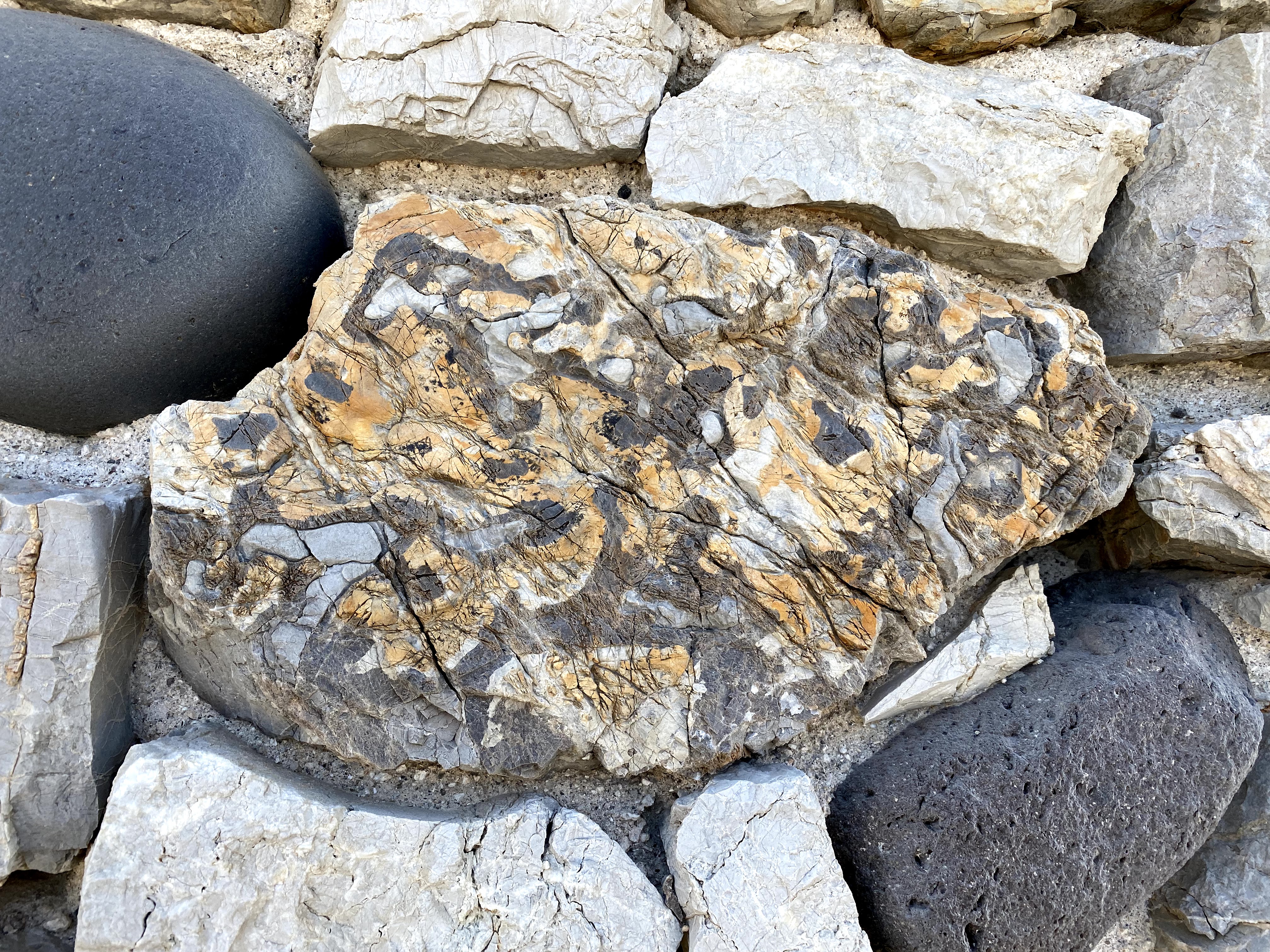
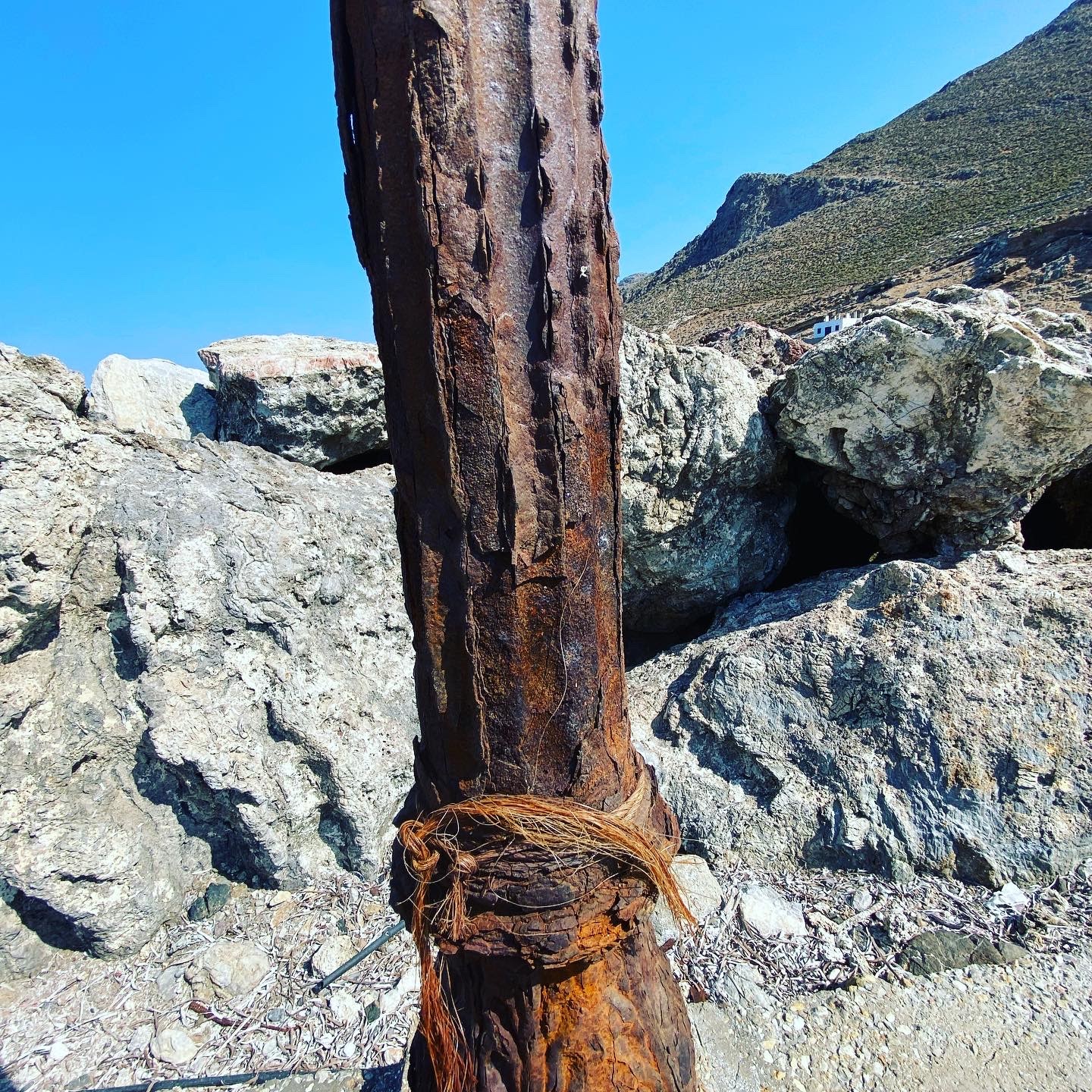
I felt like a kid again….looking at odd looking rocks and strange plants. The harbour had been made from boulders dredged from the sea with a cement pier added later….but there were hardly any boats around.
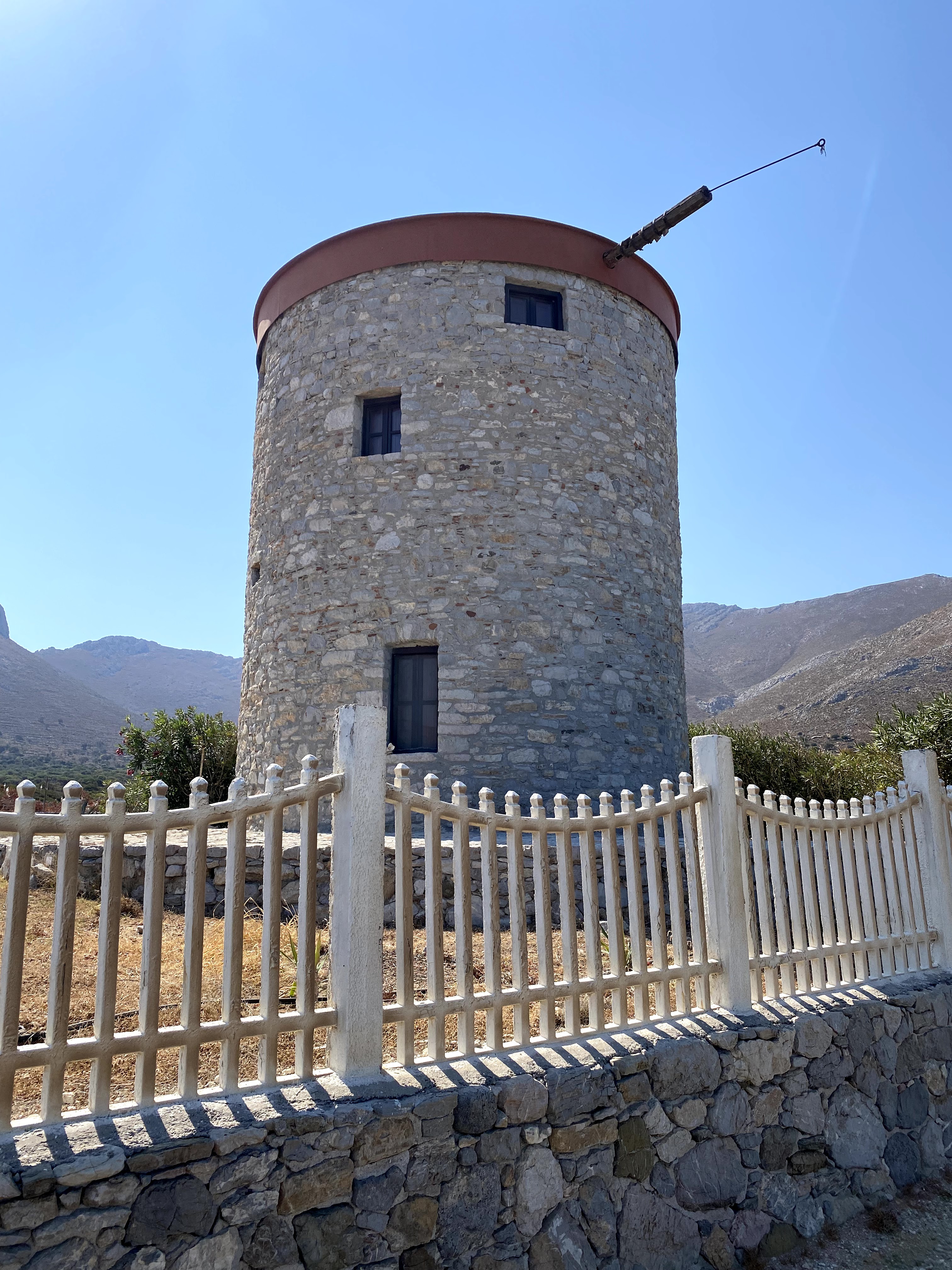
The windmill above looks like it has been converted to a building of some kind. I noticed the fence in front of it is made from formed cement! Wood must be expensive. While we were going through the town on the bus I noticed many small cement mixers and bags of cement lying around. They must use cement for everything here.
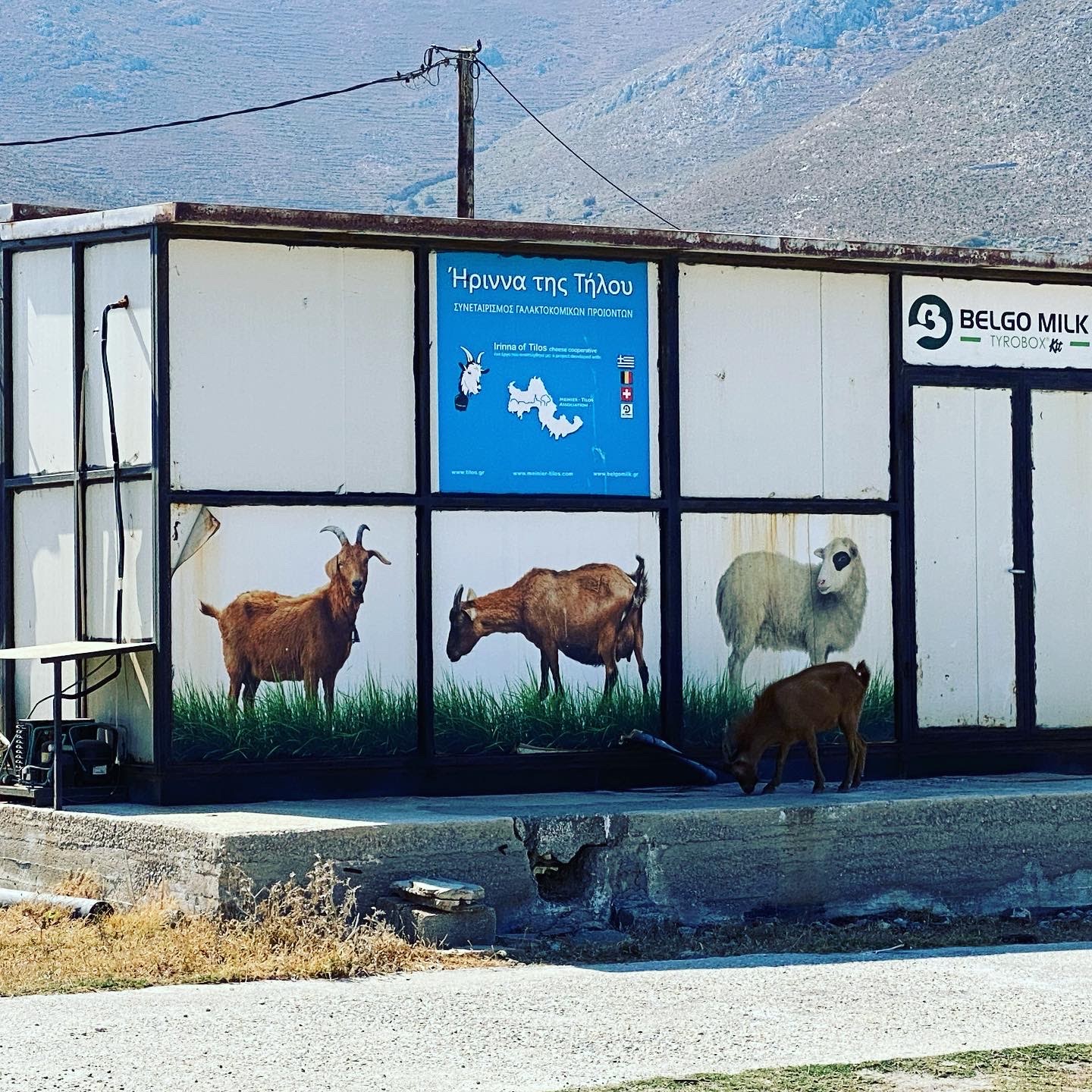
There were goats everywhere outside of the tourist area. Some of them blended in perfectly with the background and were very hard to see. Are these owned goats? Wild goats? I have no idea but they were everywhere. I saw several licking water from leaking water taps.
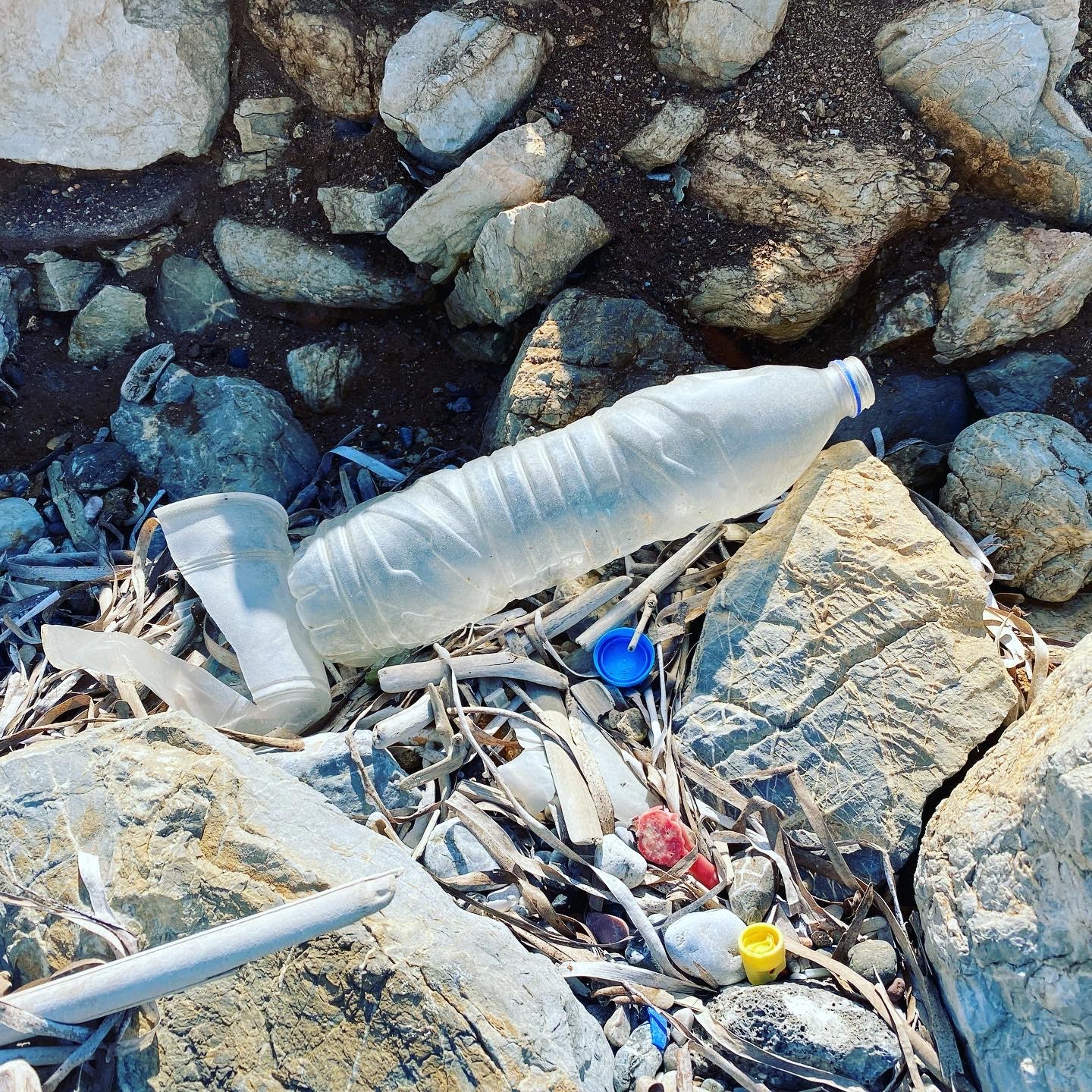
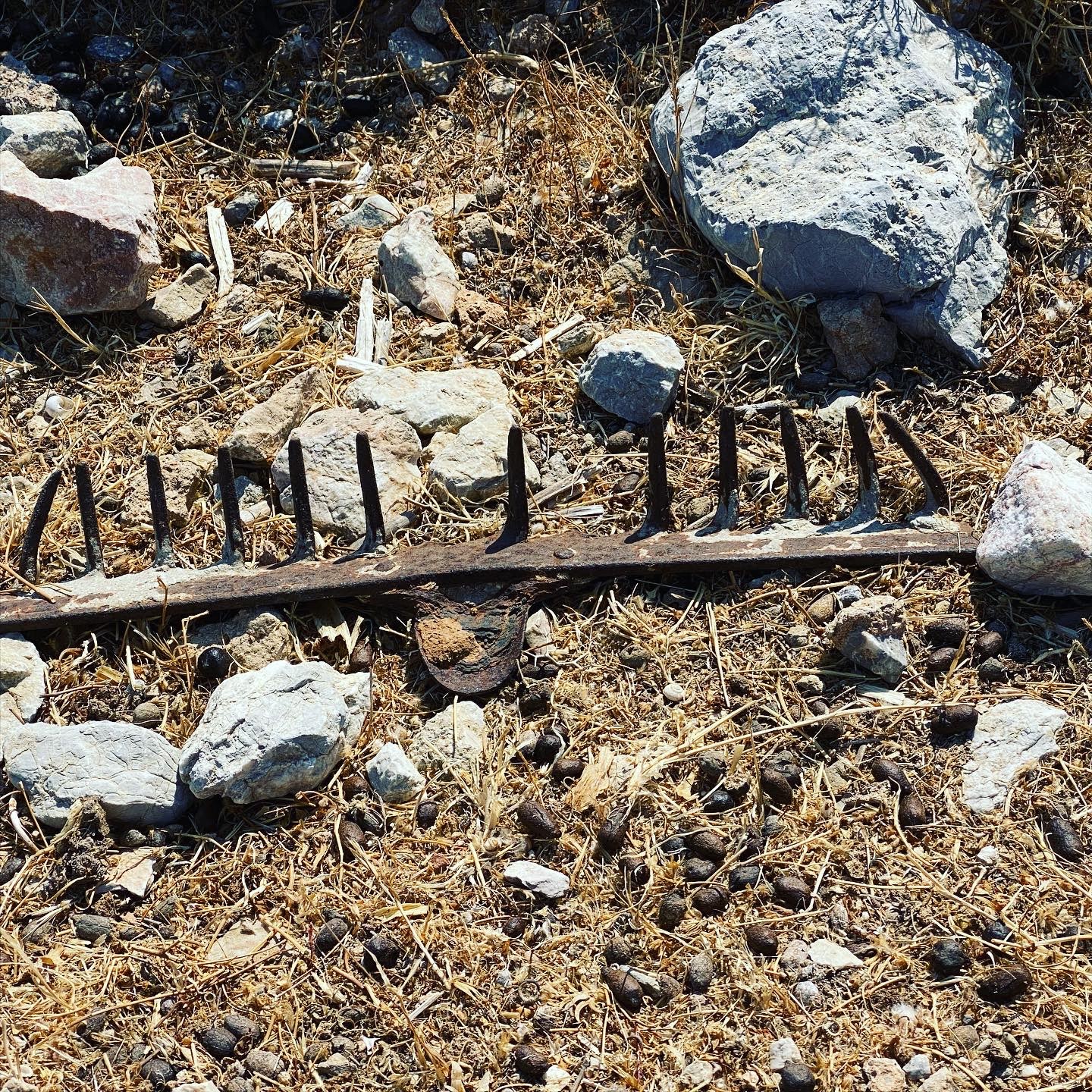
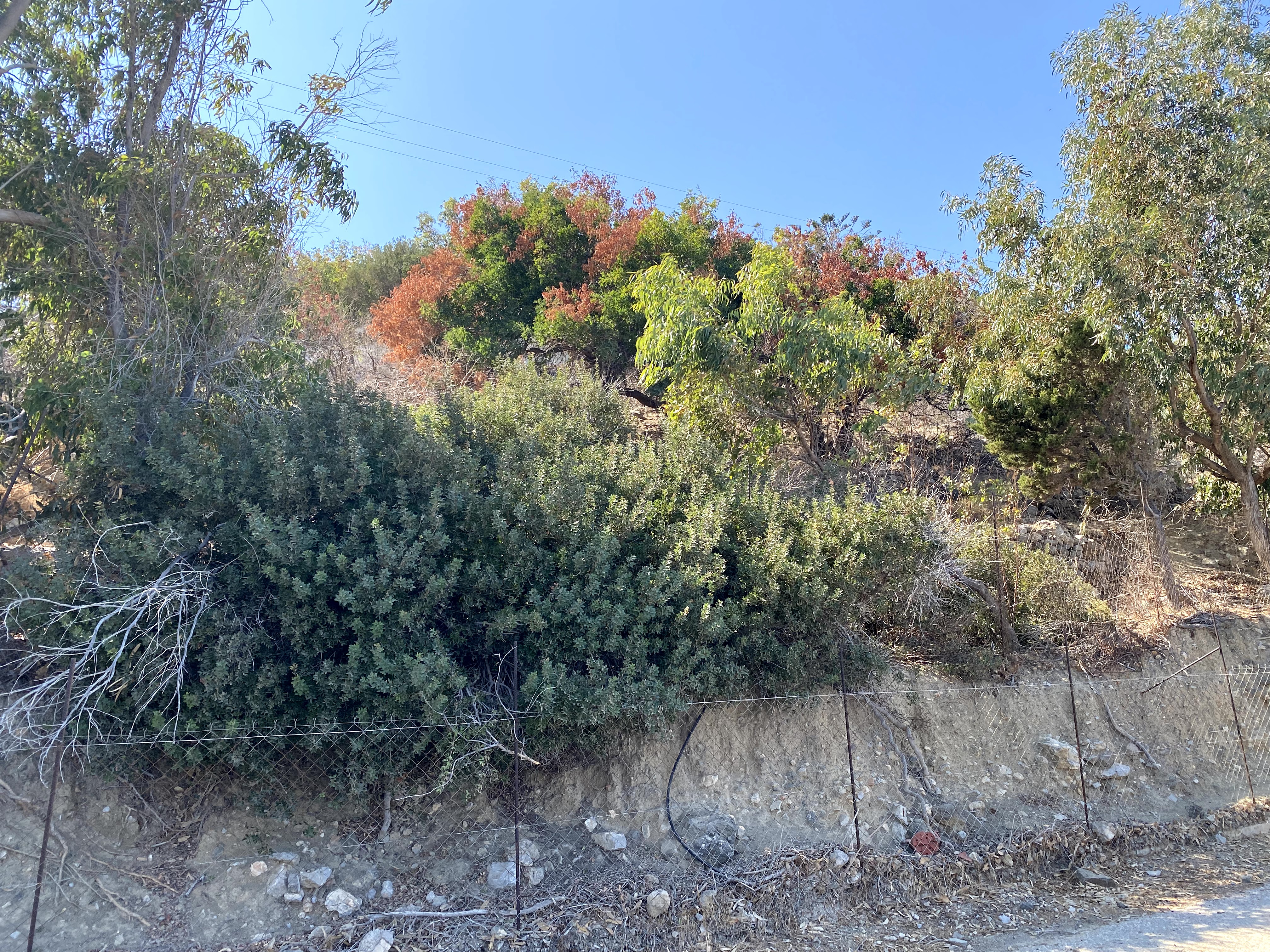
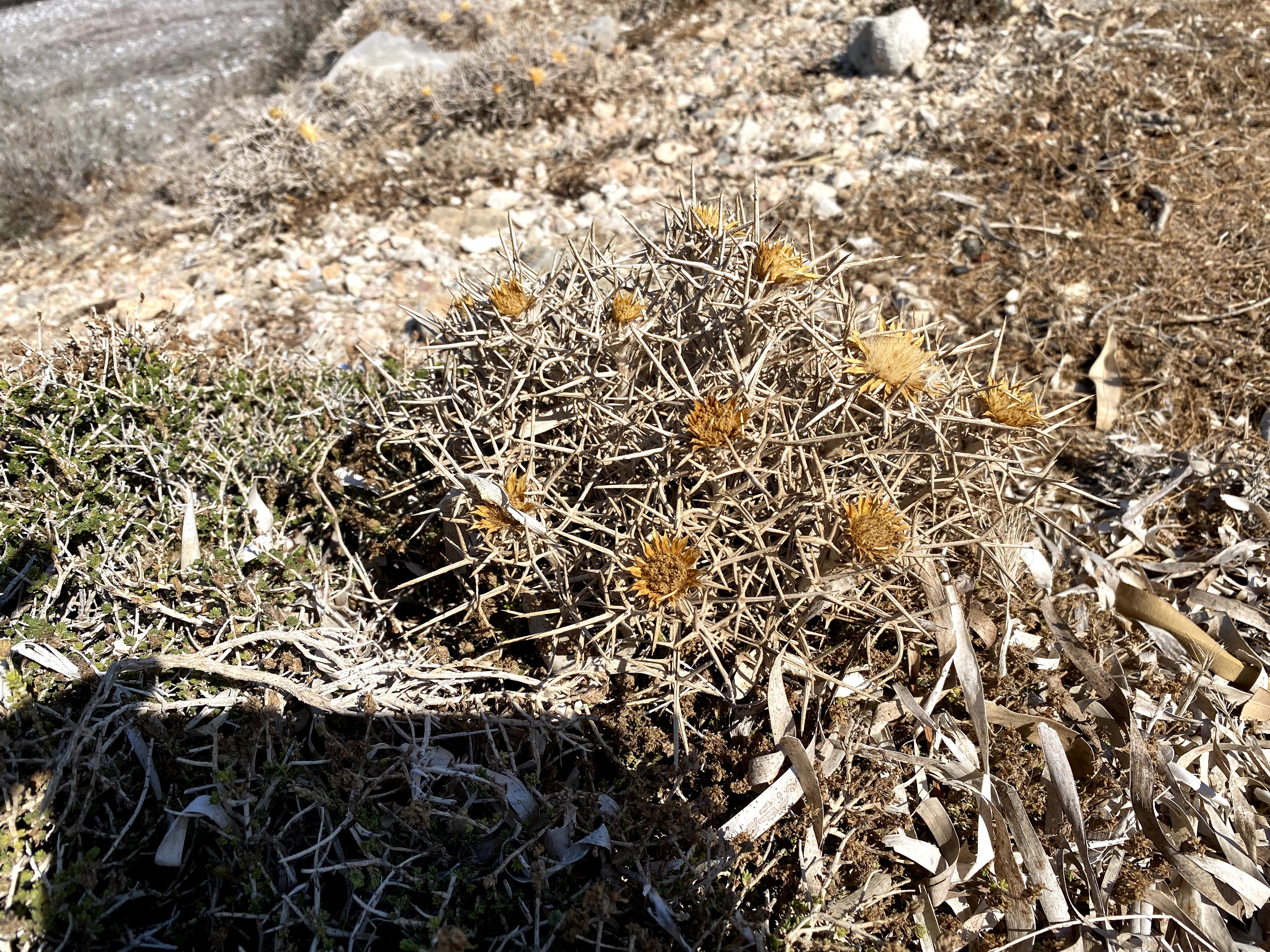
It amazes me how little rainfall Greece gets during the summer. Once you get away from the ocean it is so dry it reminds me of the conditions in Kenya!. The plants must hibernate in the summer and wake up when they get rain in the winter.
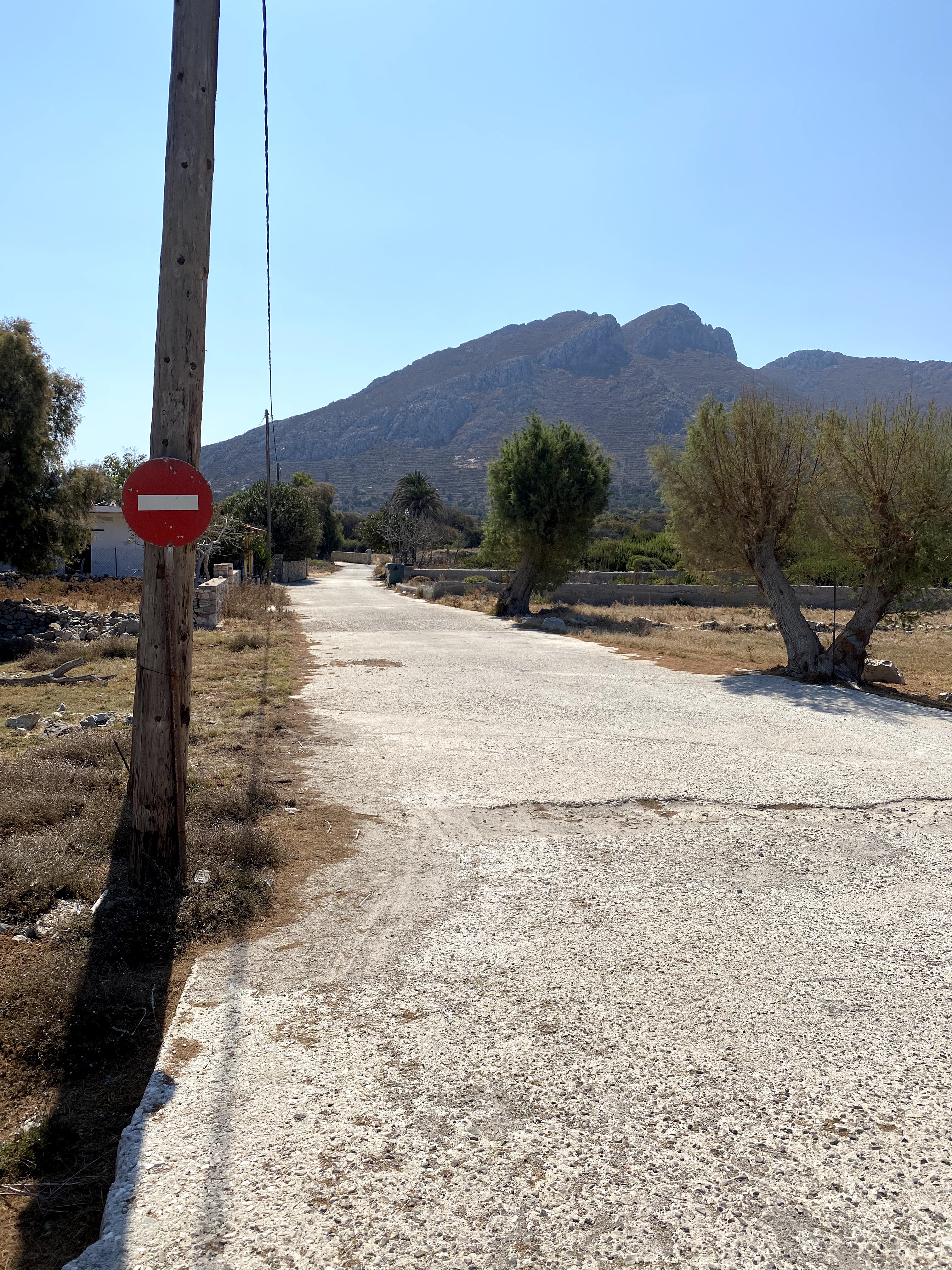
One funny thing was seeing a ‘do not enter’ sign on a road that probably gets one car a day:
The old greek lady mentioned to Victoria that they had a doctor who visited the ‘big town’ once a week, and the port area another day of the week. If you want to go somewhere that is the wild-west….but still part of Europe then this is the spot. Build a little 2 story white cement house, add solar panels with some batteries with a backup generator, get some goats and bees and a few olive trees and you are set.
 Adventures on Spruzzo
Fun post Jeff. I feel more at peace after reading it.
LikeLike