We were away from Crete and the boat from mid-December to mid-January. It was still nice when we left. The day after we got back, I spoke to an old (i.e. looks older than me 😉 British sailor on a boat near ours (who worked for years on Greek fishing boats, speaks some Greek and has huge gnarly claw-hands) who told me that for a few days it was so windy and wavy in the marina that people couldn’t leave their boats. He had to go on a friend’s boat to move some stuff around, and he said it was a challenge to stand and work on the boat. We missed this adventure. Part of me wishes I had been here.
A week or so after arriving back to the marina/boat/home, Greece had a once in a lifetime cold snap. Northern Greece got lots of snow, and even here in the southernmost part of Greece we got enough snow to shut everything down Daytime temperatures went down to 5. It was so cold the cashier at the local grocery store told me that she was having trouble heating her house. She had a few space heaters but they couldn’t keep up.
Obviously ‘cold’ is relative to your expected normal. In Toronto we might go outside in shorts for a short walk but here everyone puts on a winter coat when the temperature is below 15. I get looks when I’m out without a coat (maybe wearing a hoodie) although it is obvious to anyone here that I’m not Greek. (I mentioned once to Victoria’s mom that I didn’t know how local people could tell I’m not Greek and she laughed out loud.)
After several cold and rainy days we had a sunny beautiful 13 degree spring day in January!. Victoria more or less insisted we go out. I agreed to a drive…..which turned into a beautiful hike. We had driven to a nearby local small town called Kavousi (or Καβούσι if you can read Greek 😉 …probable population ~ 20) and had gotten out of the car for a walk when we found a sign for ‘Old Olive Tree‘ (it’s own wikipedia page!) and went walking to it….ended up hiking 150m+ up and maybe 2km long paths….some paths with embedded stones (maybe very old paths?). It really made me appreciate how if you were a guerilla force hiding in the hills then steep paths like these are your friends….. even though rocks have been embedded in the ground to give you footing it is still climbing. I couldn’t imaging ascending these paths worrying about someone shooting down at me! The slope at some points was close to 45 degrees, and there were some spots where there were steep drops to the side of 10m+. You wouldn’t want to slip over.
Along the way we came across this house with land that would have had the most beautiful view:
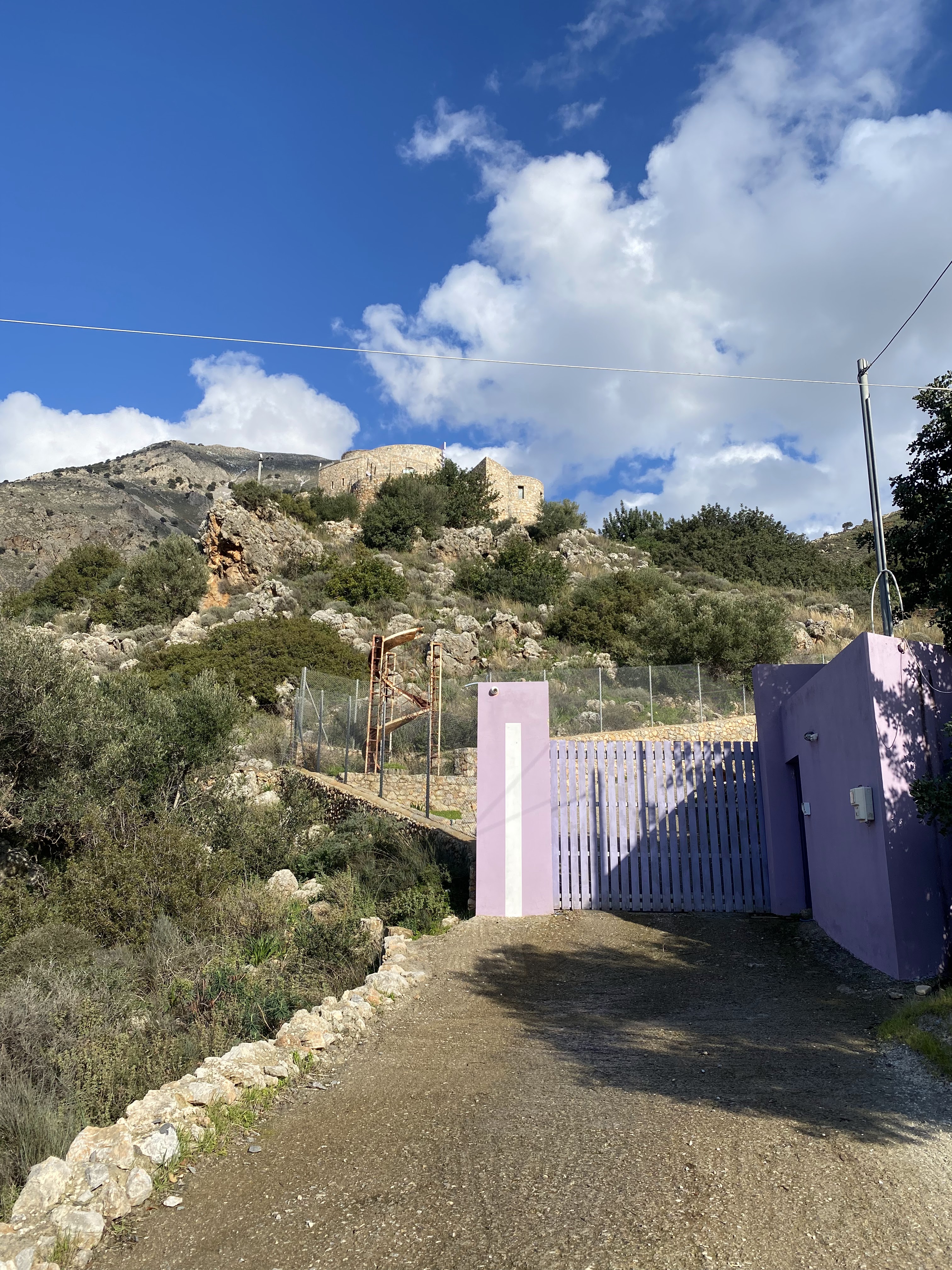
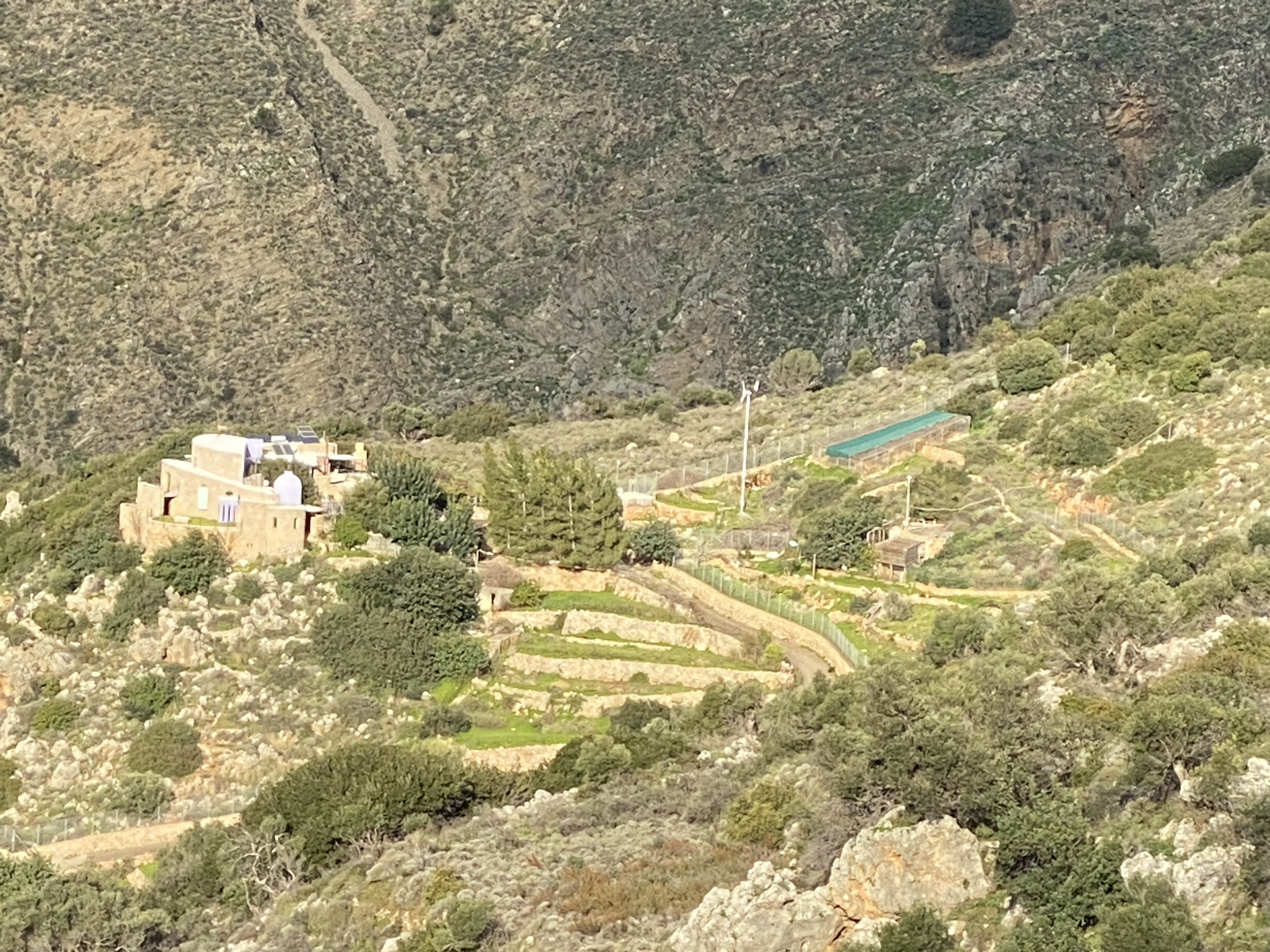
This house has a view of several mountains and the ocean, has some olive trees and a covered garden at the back, and another building in the back. This would be a great place to live! This house is hundreds of meters up and surrounded by mountains with an ocean view….a bit like this:
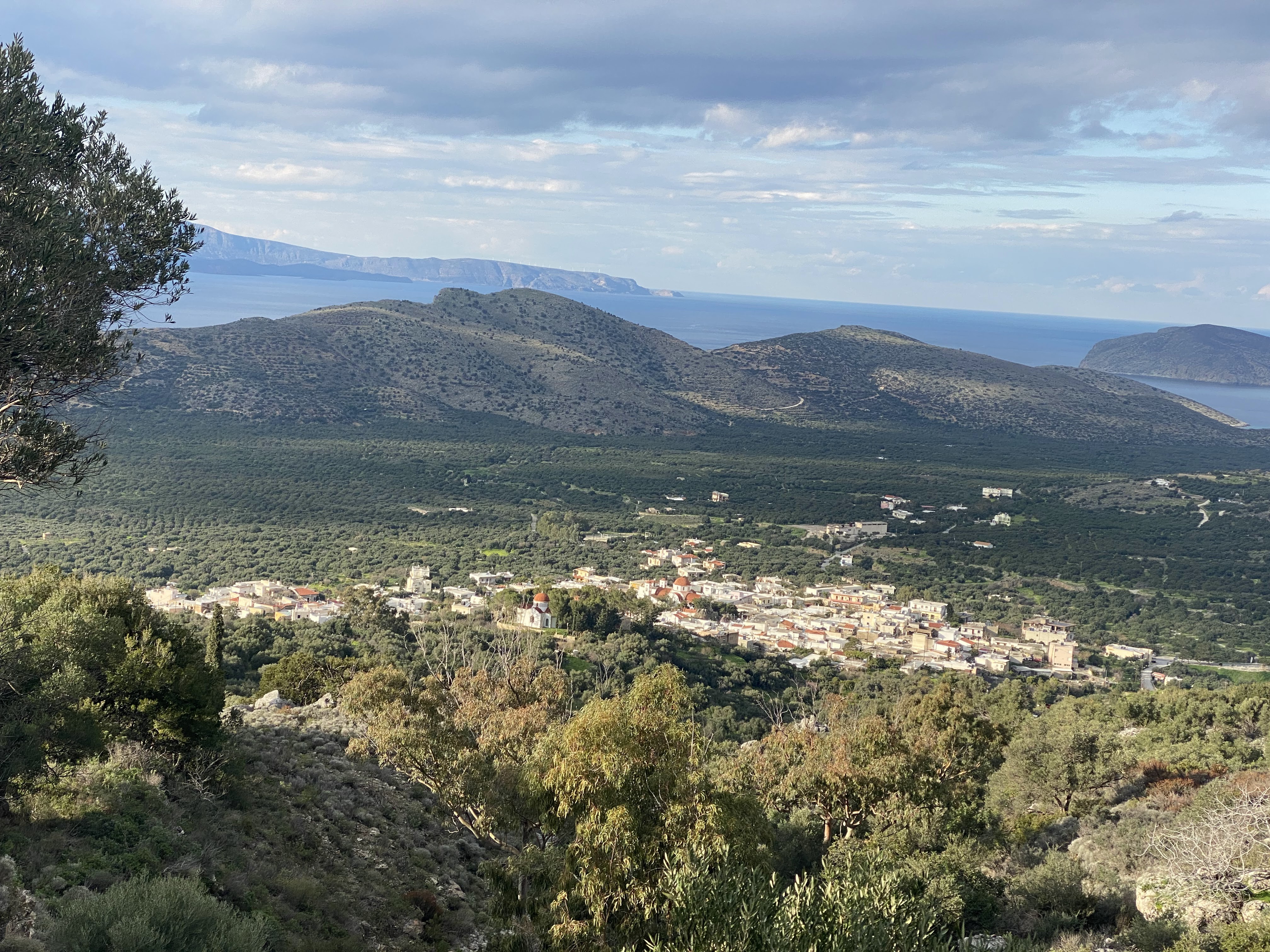
Only downside is you are facing mostly north and you have mountains to the south but still amazing.
Back to the hike. Below is an above average path. Usually the rocks are not as packed and rougher and steeper.

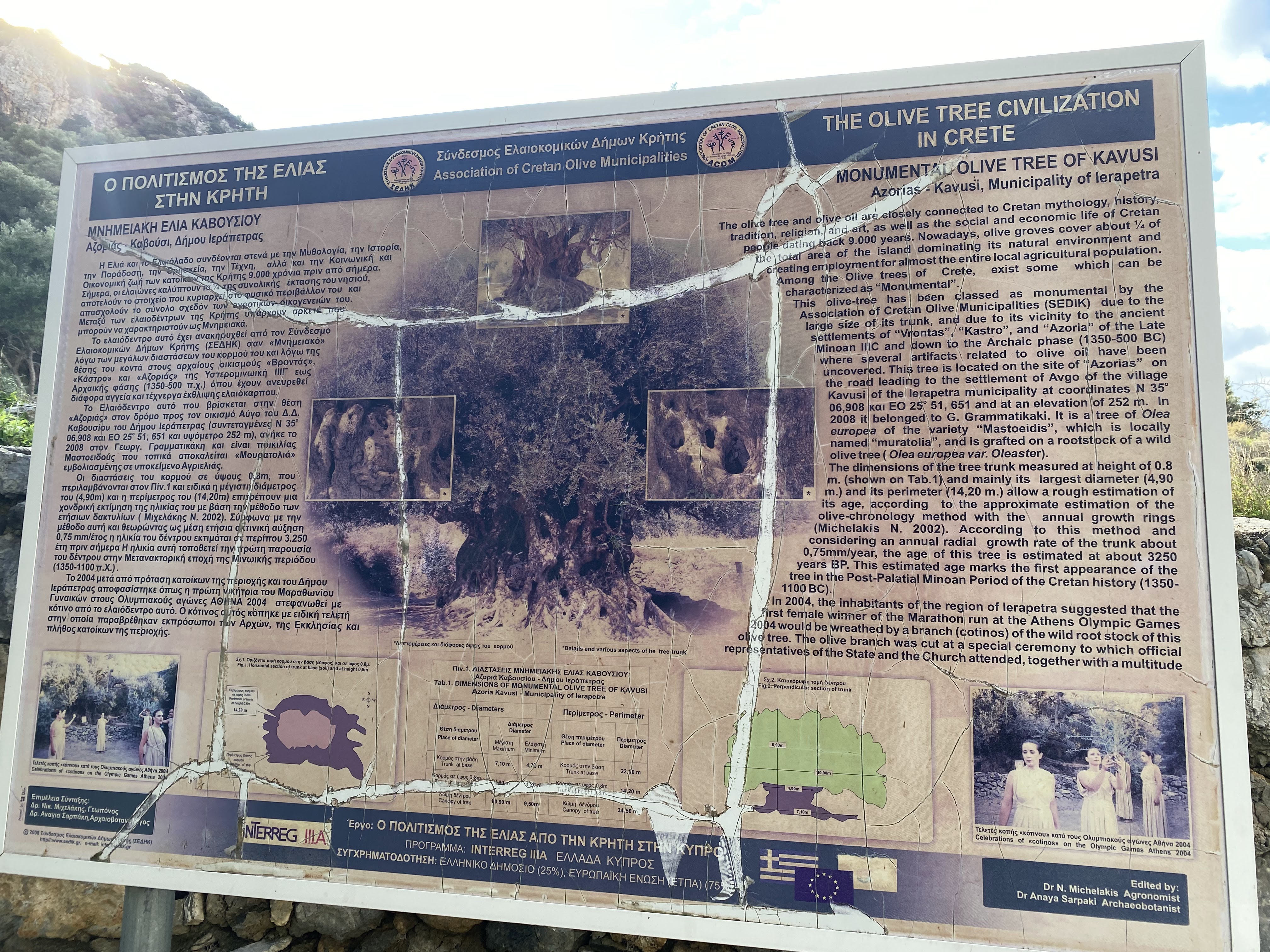
After lots of hiding we got to this tree with signs where it claims to be 3,250 years old (!!!!!). Who knows but it is very old looking. That long ago people were just figuring out how to forge steel (late Bronze Age/Early Iron Age). Here are 2 pictures.
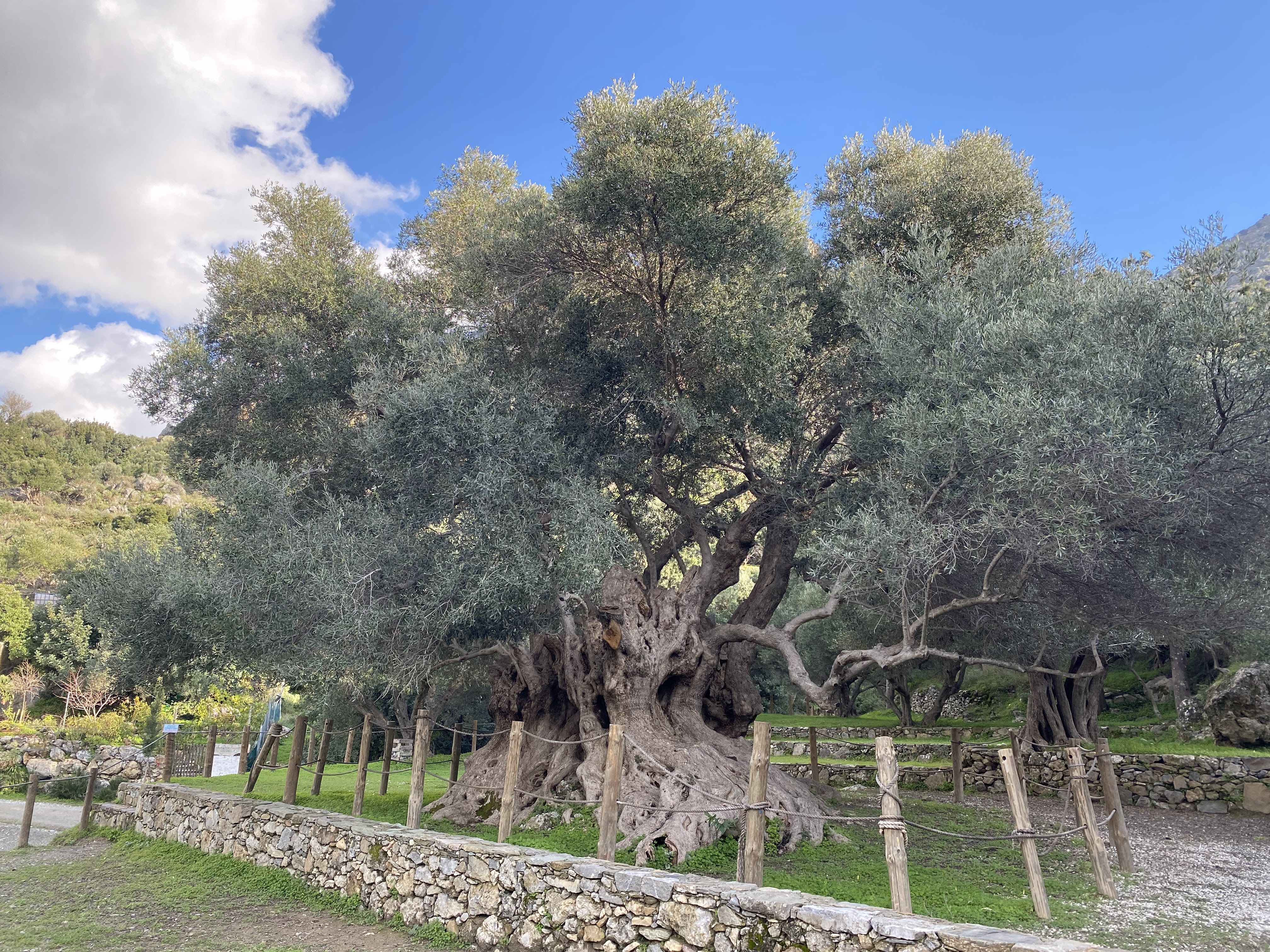
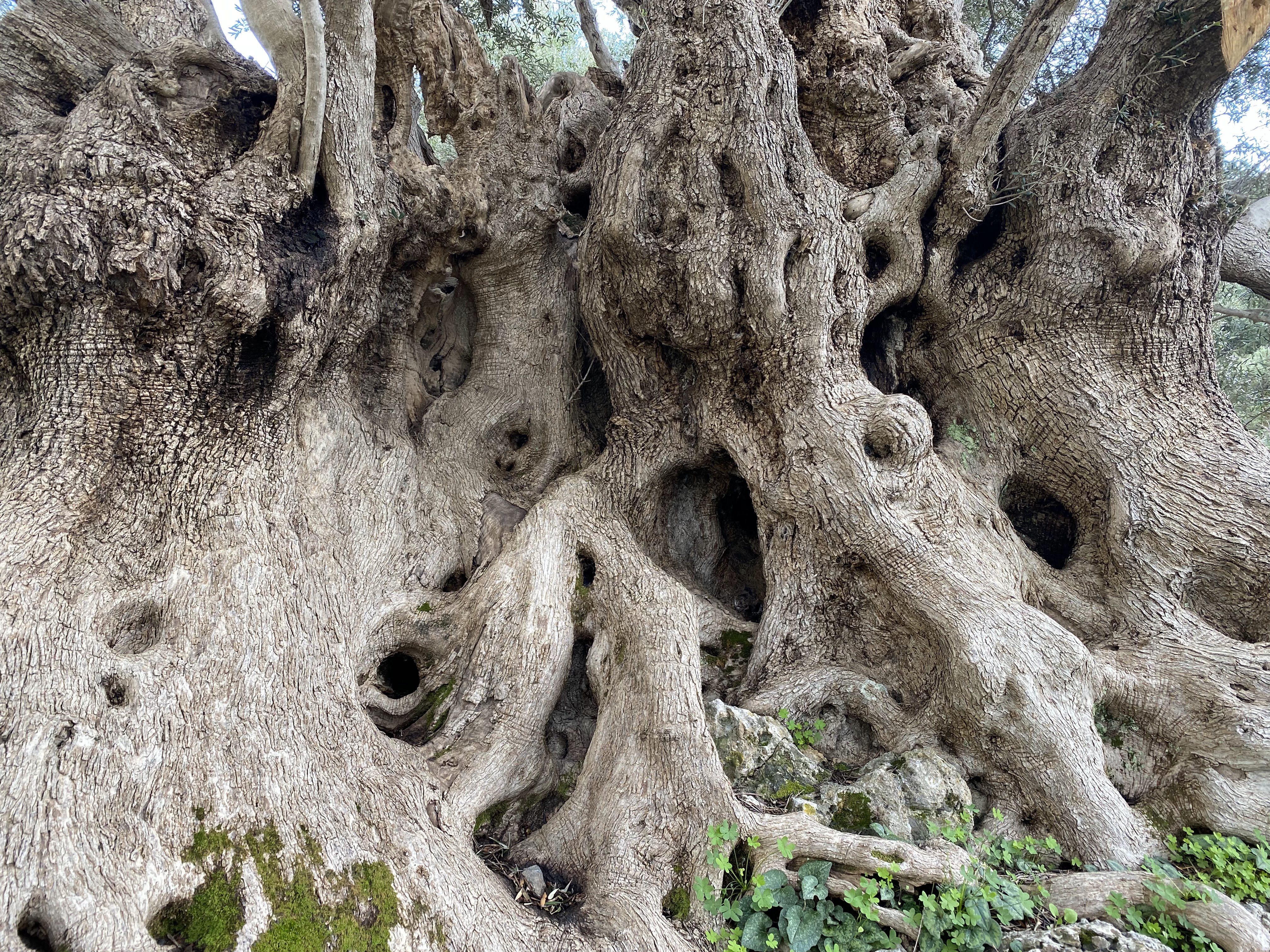
You can’t tell, but the thick part of the trunk is just over 4m in diameter, and the bottom part is 7m wide. Not as big as a giant redwood in California, but these guys have to live with 9 to 10 months of very little rain.
A remarkable unplanned day that started from a desire to go for a walk and ended up being ‘A Life Event’.
In closing I’ll mention that olive trees are extremely important in Crete. In the west we don’t normally give much thought to olives (except for martinis) but here they are a very important part of the economy and food/culture. Olive groves are kept for generations. I remember Nassim Nichols Taleb tweeted:
To understand scaling in politics/economics/culture: Mediterraneans (olive oil pple) have traditionally done best in groups & organizations of size < n, N. Europeans (Butter pple) do best in groups & organizations > n.
Which is a really interesting idea. (You really should read The Black Swan.) If you follow him on Twitter you will see how reactive he can be……but his books are genius.
 Adventures on Spruzzo