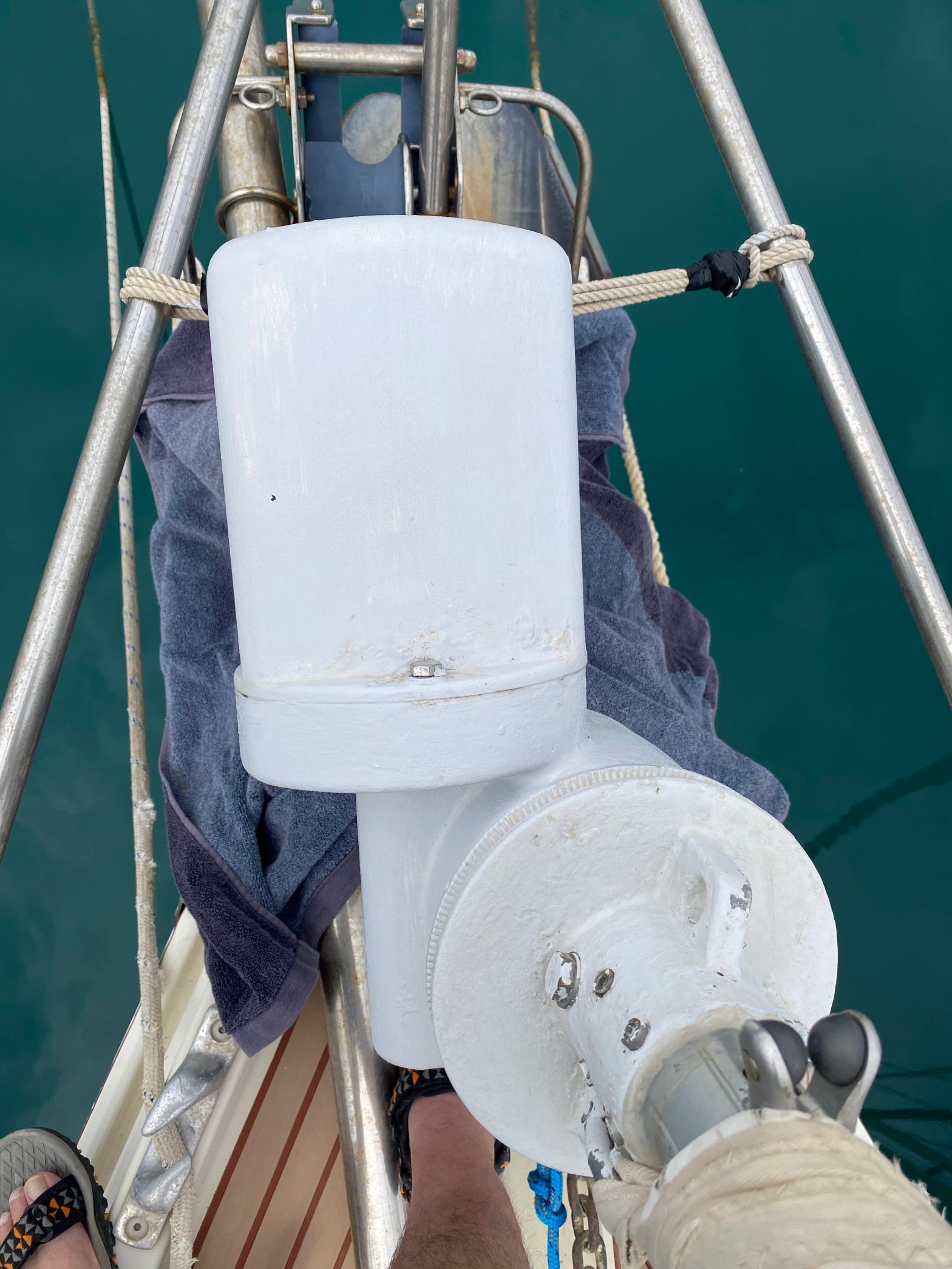
This is a picture of the Genoa Furler Motor from above. The Genoa, or JIb (there is a technical difference) is the big sail at the front of the boat. There is a control in the cockpit that lets me take in or let out the Genoa immediately. The lines holding the foot of the Genoa also go to motorized winches, so I can take those in automatically as well. To let them out I have to unlock the line and slowly let it out……which can be tricky if there is a lot of load on the sail. I can also take in and out the main sail by moving two cockpit controls. They have an electric motor each.
The Amel is easy to sail because a lot of the manual work has been electrified and just requires a switch. On most boats, you are cranking in sails manually. On the Amel, you flick a switch. Except for the smaller Mizzen sail on the 2nd mast at the back of the boat that you do manually, but since it is small it is not so difficult.
Two days ago, I decided to test the controls as I expect we will be leaving within a few weeks. I tested the electric windlass (pulls the anchor up and down), tested the two large power winches, took the mainsail out and in, and then started to unfurl the jib. It moved about 2 inches and then stopped. Oops! I noticed that I had forgotten to remove our clothes lines from the jib, and I assumed I had thrown the breaker that stops the motor from over-heating if it gets stuck.
I went and re-set the breaker. Nothing. I hadn’t had a problem with the jib motor before, so I sat down to research how it worked. I contacted my Amel support guy Bill Rouse, and he sent me a bunch of stuff to read. I watched several videos on how to fix DC motors. I have to admit now that I have insufficiently loved DC motors. They are everywhere around us, in literally everything that has a battery that moves, and they are amazingly simple and magical.
I could take any 10-year-old kid and make them fall in love with technology by showing them how to build a little DC motor and start playing with it, and then showing them how to make it stronger, and if they were interested explain the math of it all. They really should teach kids this way.
In any case the next morning I got up and took the cover off of the motor. This is what I saw:
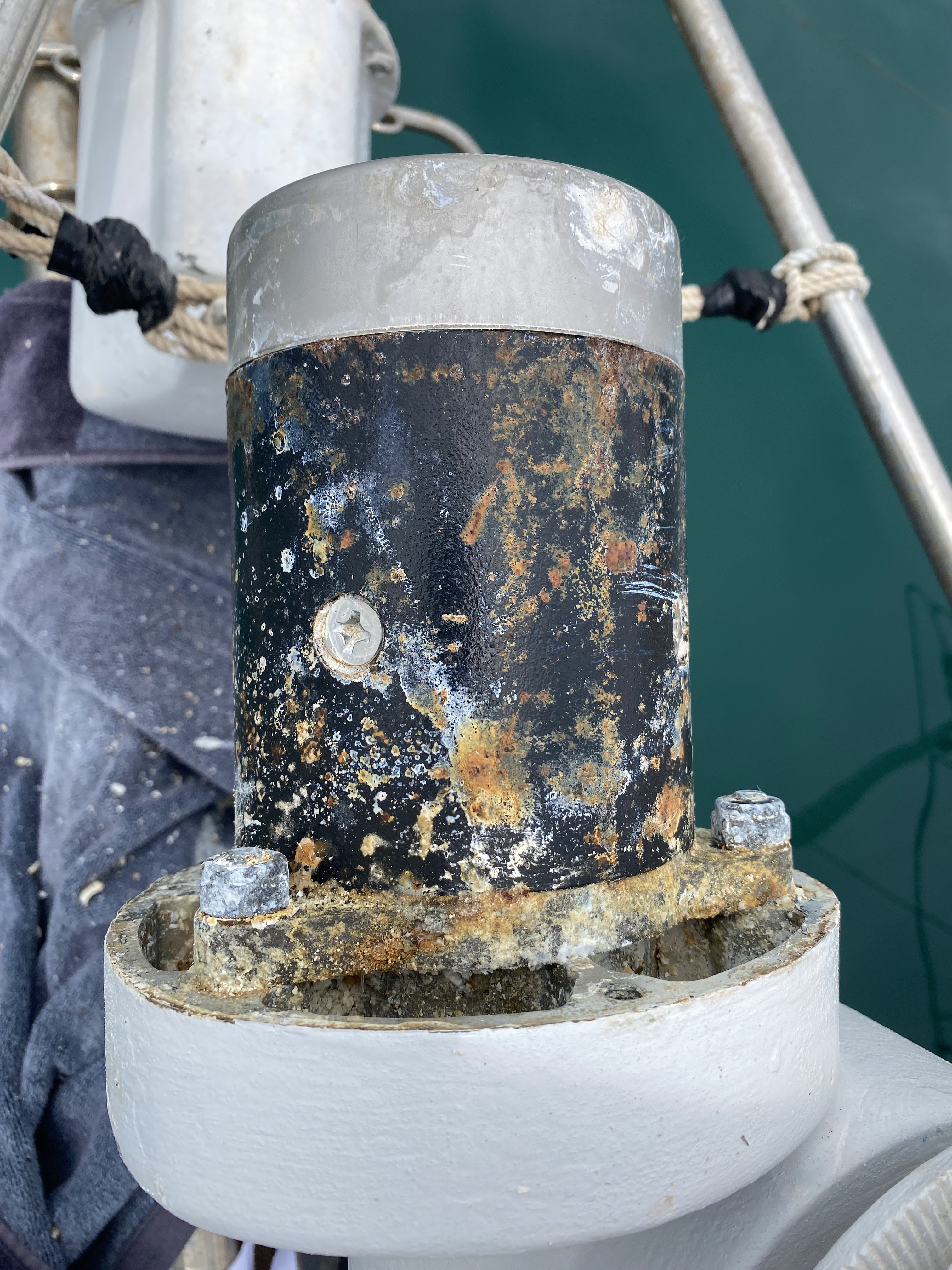
The motor was covered in yellow gunk that reminded me of the gunk that forms in the bilge, which I think is soap and grease coalesced. There was moisture on the outside of the case! It was a big mess. This was the most appalled I’ve been outside of cleaning the bilge. In any case I wiped it off a bit, removed the 3 wires (+ forward, negative, + backward) and the 3 bolts that held it in place and took it back to the cockpit.
This is what I had after a bit more cleaning:
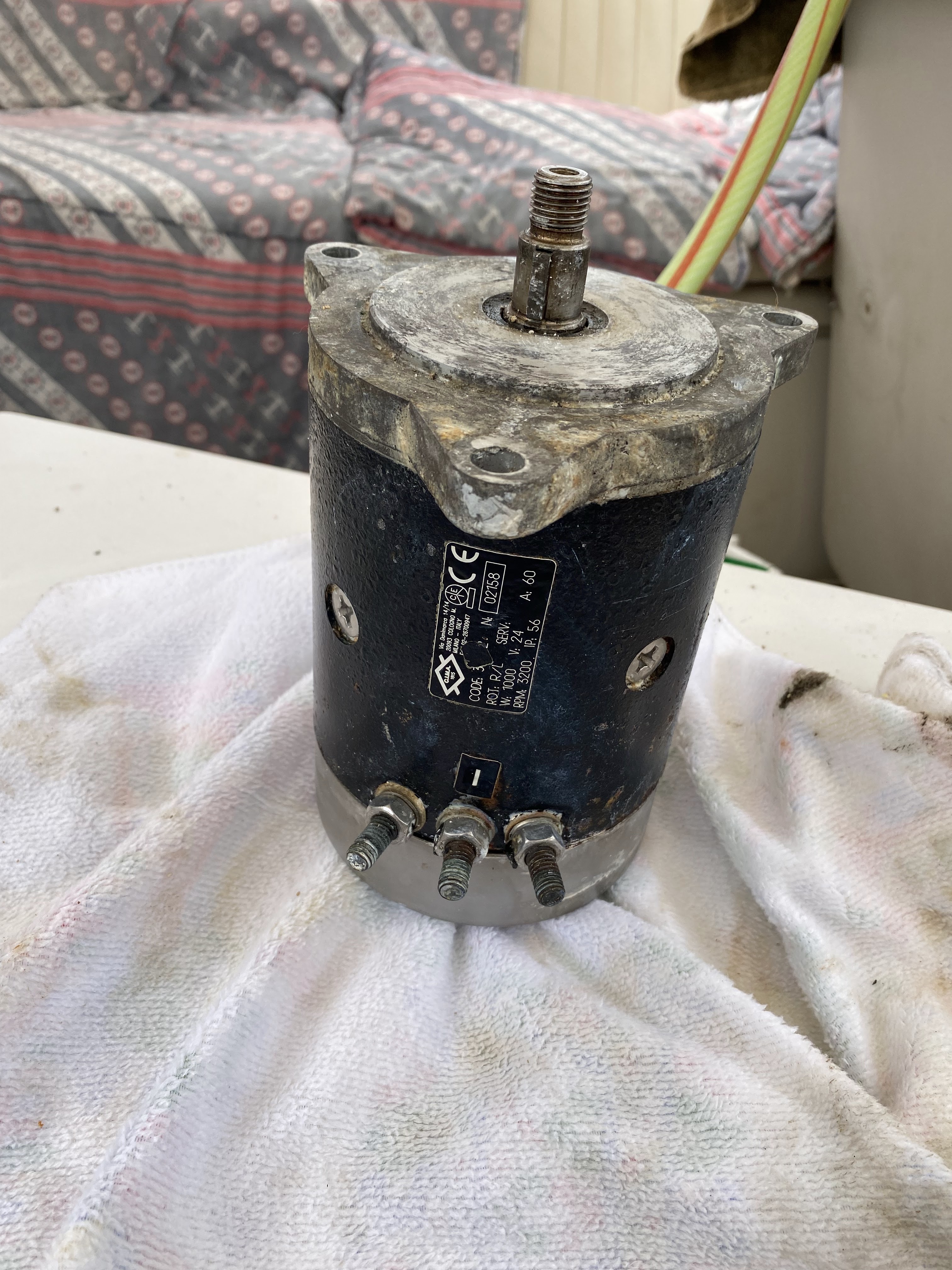
The motor was now cleaned up and dry, but I wanted to see inside. I took off the top cap:
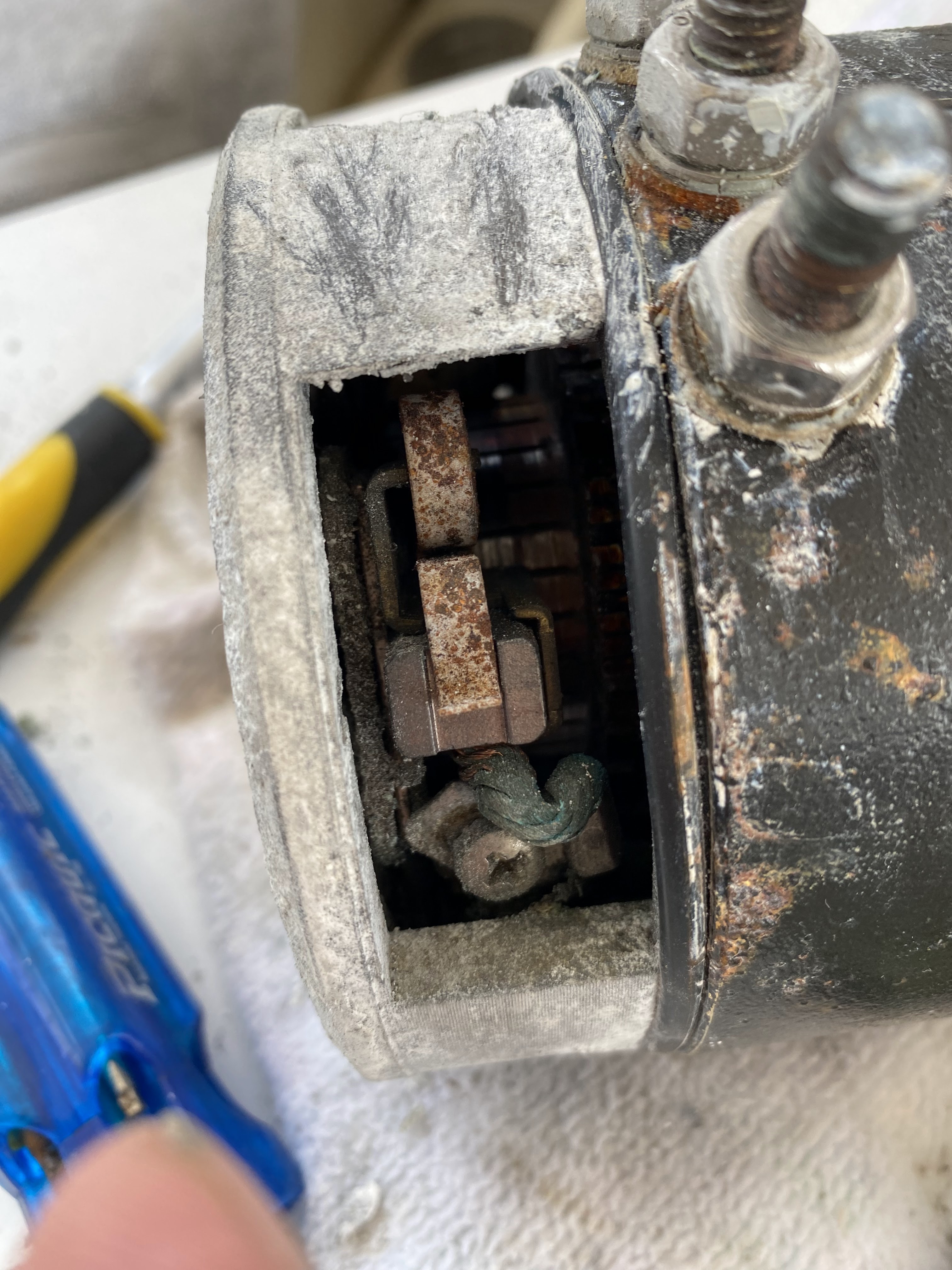
A bunch of dust came out, which is from the ‘brushes’ abrading away when the motor turns. The brushes are graphite and carry electricity to a turning part. I’m amazed they last so long. The dust they create can cause issues in these motors, so I made sure to get as much of the dust out as I could.
I then tested the motor with 24 volts direct from my batteries…….and it worked! I was very happy at this point….but it was possible that the problem was never the motor and something mechanical between the motor and the gears turning the jib.
So, I went to the jib and tried to turn in manually. You can’t do this when the motor is in place, but this time it worked! I was happy again…..but then I noticed this:

This is called a ‘bushing’ I think, and holds the gears in place that the motor connects to, and it had almost completely popped out and could have fallen in the sea! OMG! (BTW I cleaned up the area you see here before I put everything back together).
After some fiddling by turning the jib/genoa back and forth manually I finally got the bushing back in place and cleaned everything up nicely before re-installing the motor. I used ‘instant gasket’ around the 2 parts that had let in water before, and I managed to get ‘instant gasket’ on everything (it didn’t want to come out of the tube easily). I ruined 2 towels by getting this stuff on them. Just before I had dropped my favorite multi-bit screwdriver overboard. This repair took 3 sacrifices. I don’t care so much about the towels but losing my favorite screwdriver hurt.
I put the motor back, 3 nuts, then re-attached the power (3 nuts), then replaced the case with lots of instant gasket (probably over did it) which again had 3 nuts. It all went back together easily, and it then worked!!!!!
I was very, very happy to have fixed this, and now know how the DC motors on the boat work. Very satisfied! Victoria and I went for a walk, and I had a celebration Guinness.
 Adventures on Spruzzo