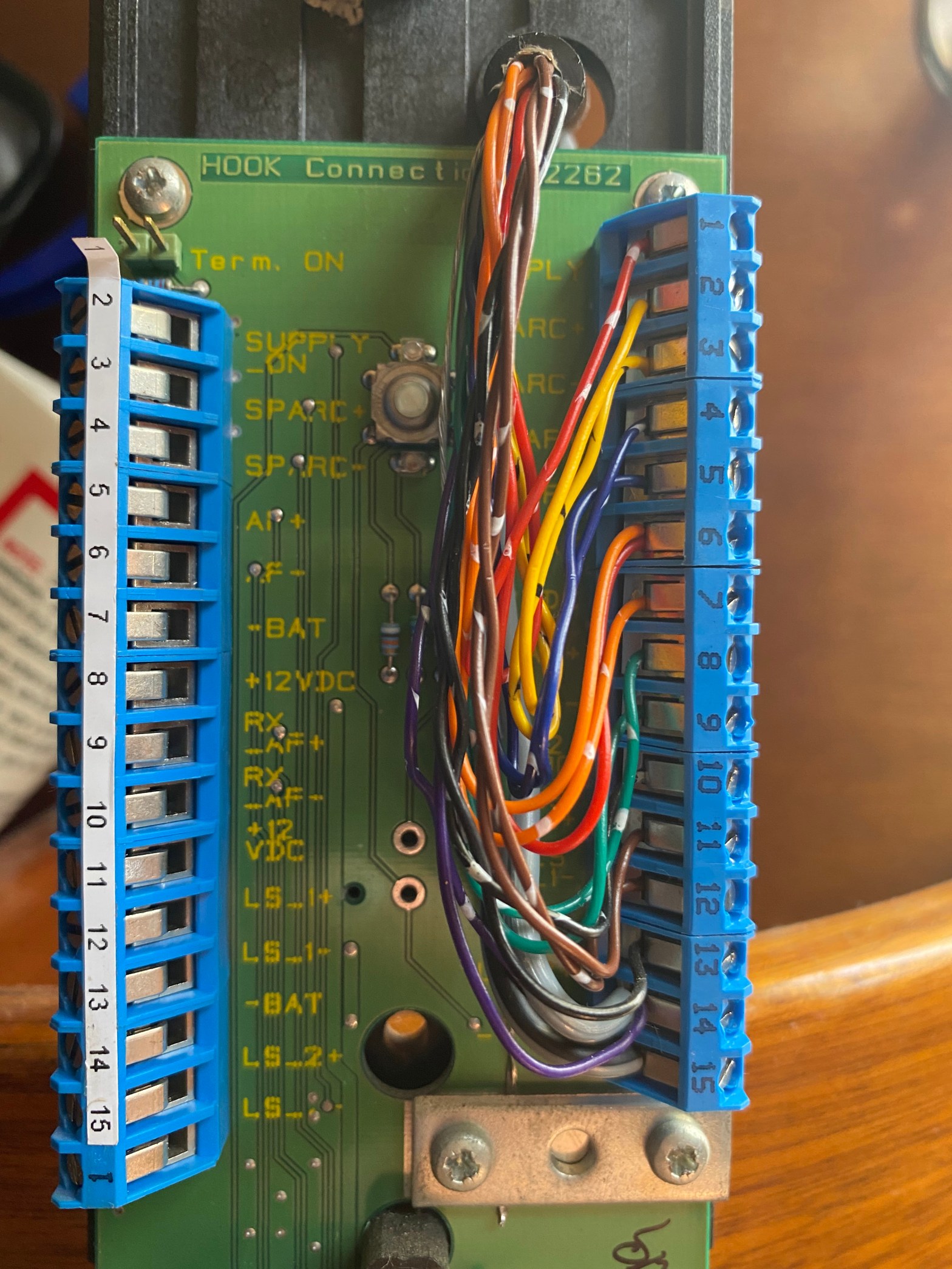
Over the last few months I’ve done a few technical upgrades to the boat. These were typically parts and pieces I bought over the winter…..and now had to finish installing before the summer. (BTW the post picture is of the internal wiring of a Sailor VHF handset. I took the picture before I undid all the wires.)
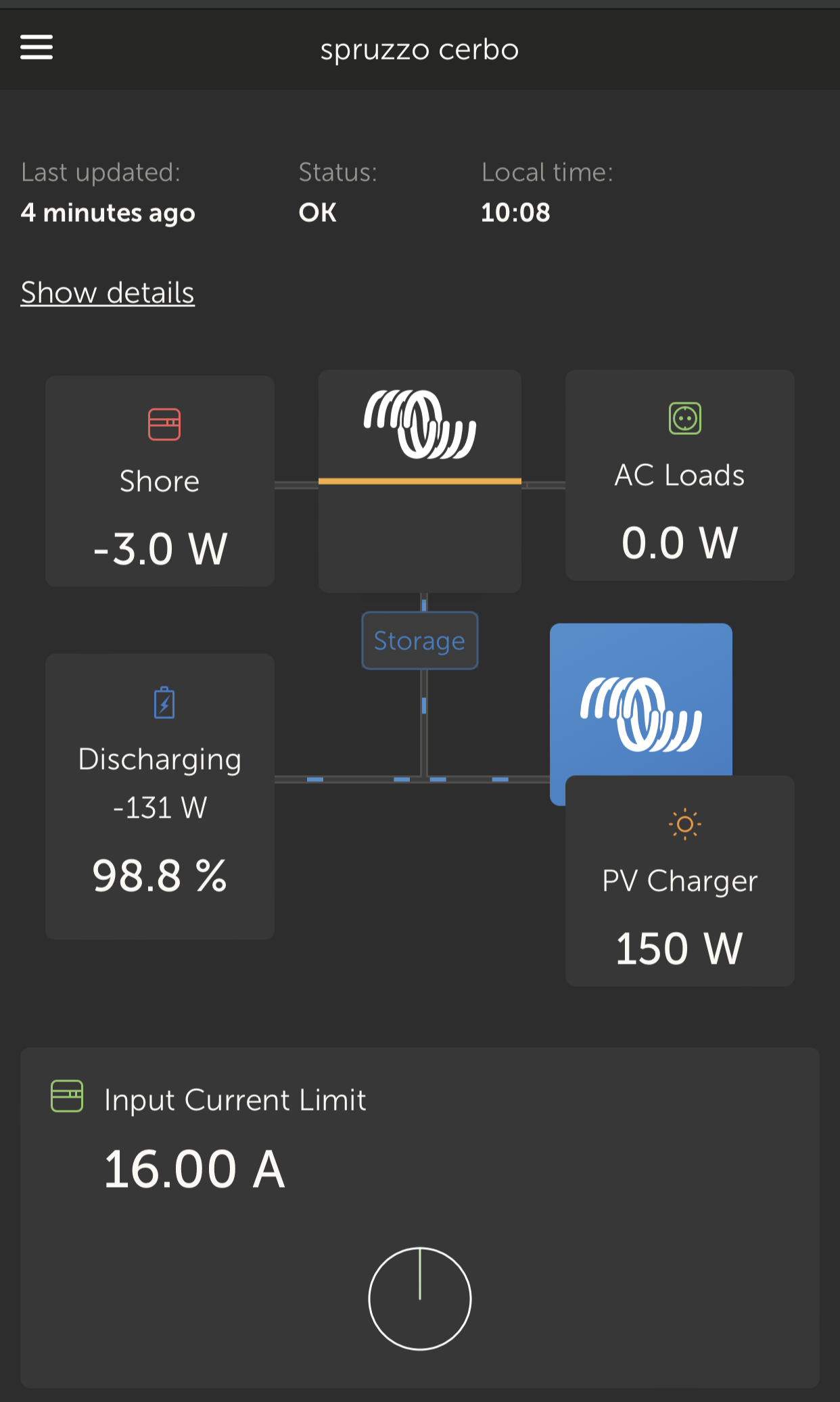
The first one was a Victron monitor/internet portal device….the Victron Cerbo GX. This device connects to my battery monitor, to my 2 solar panel controllers (I have 2x400W panels and it is better that they each have their own controller), and to my Victron inverter/battery charger. After connecting it to the boat wi-fi, it now collects data and every 15 minutes sends it to a free Victron portal so I can monitor how Spruzzo’s batteries/solar power/shore power are all working over time. Super useful. I had to run cables from my battery box (along one side of the boat) and a cable from the engine room (connecting to the inverter) to a spot just over the kitchen sink where I decided to put the device. Running the cables was harder than you think and turned out to be the hardest part. Very happy with this.
The second was something I had been wanting to do for a long time: get access to the boat’s instruments from my phone…..see below:
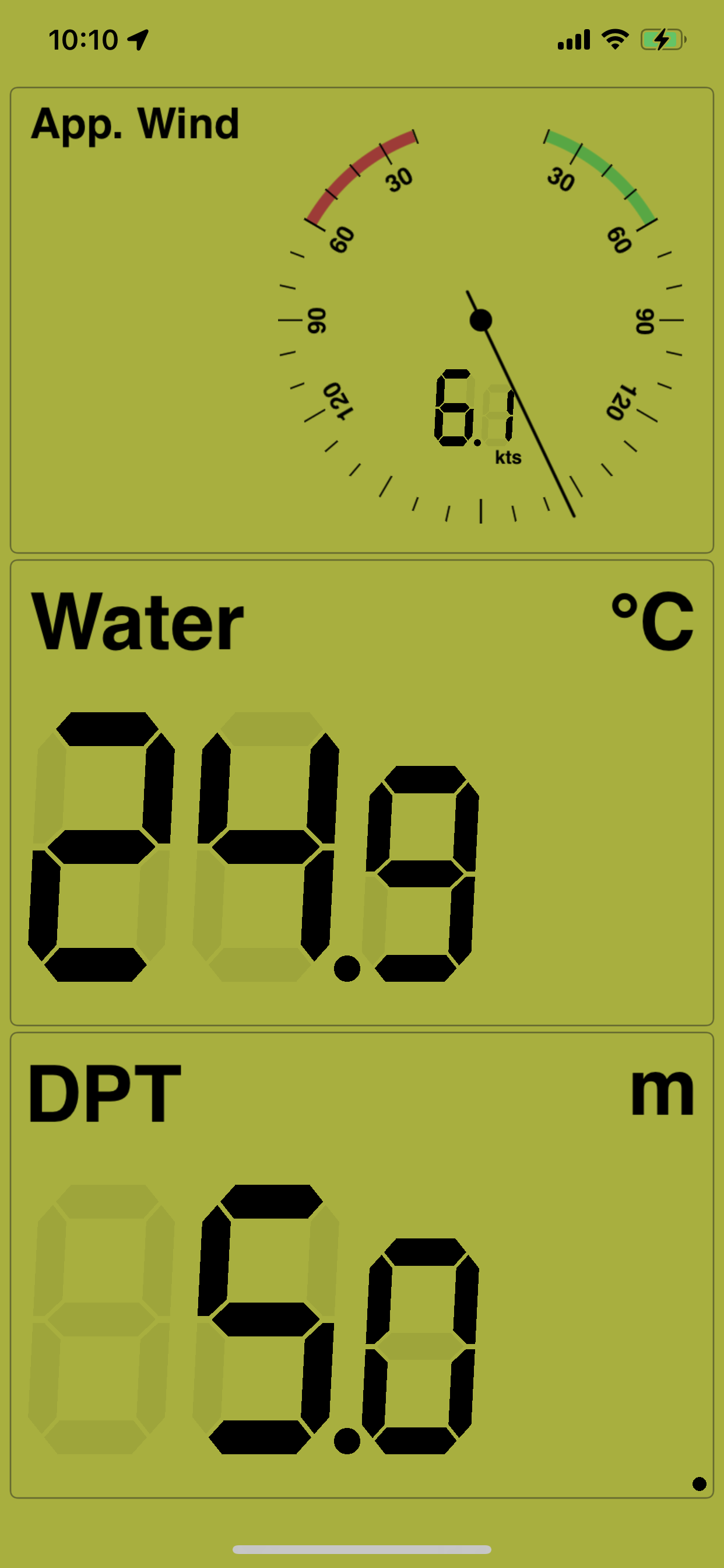
In the past, in the middle of the night, there would be howling winds and I would want to know how fast and from what directions the wind was coming from. I would have to get out of bed and go up on deck, turn on the instruments and see what was going on.
Now I can just pull up my phone and see everything I could see before! Wind speed and direction, boat speed and direction, depth, water temperature! Now I just need to add a remote control drone with a video camera to actually look around the boat (both regular and infra-red video needed….this will definitely be a project).
When I’m off-shift and Victoria is captain (I go below for a nap) I can now see better what is going on. Before I could only just check our location on the map and feel how happy the boat was…..but now I can see all the instruments.
The way all of this works is: all of the boat instruments are connected over a NMEA-2000 network. Simple serial connections but of course the cables cost a fortune. The devices are all connected in series with an in-cable and an out-cable to the next device.
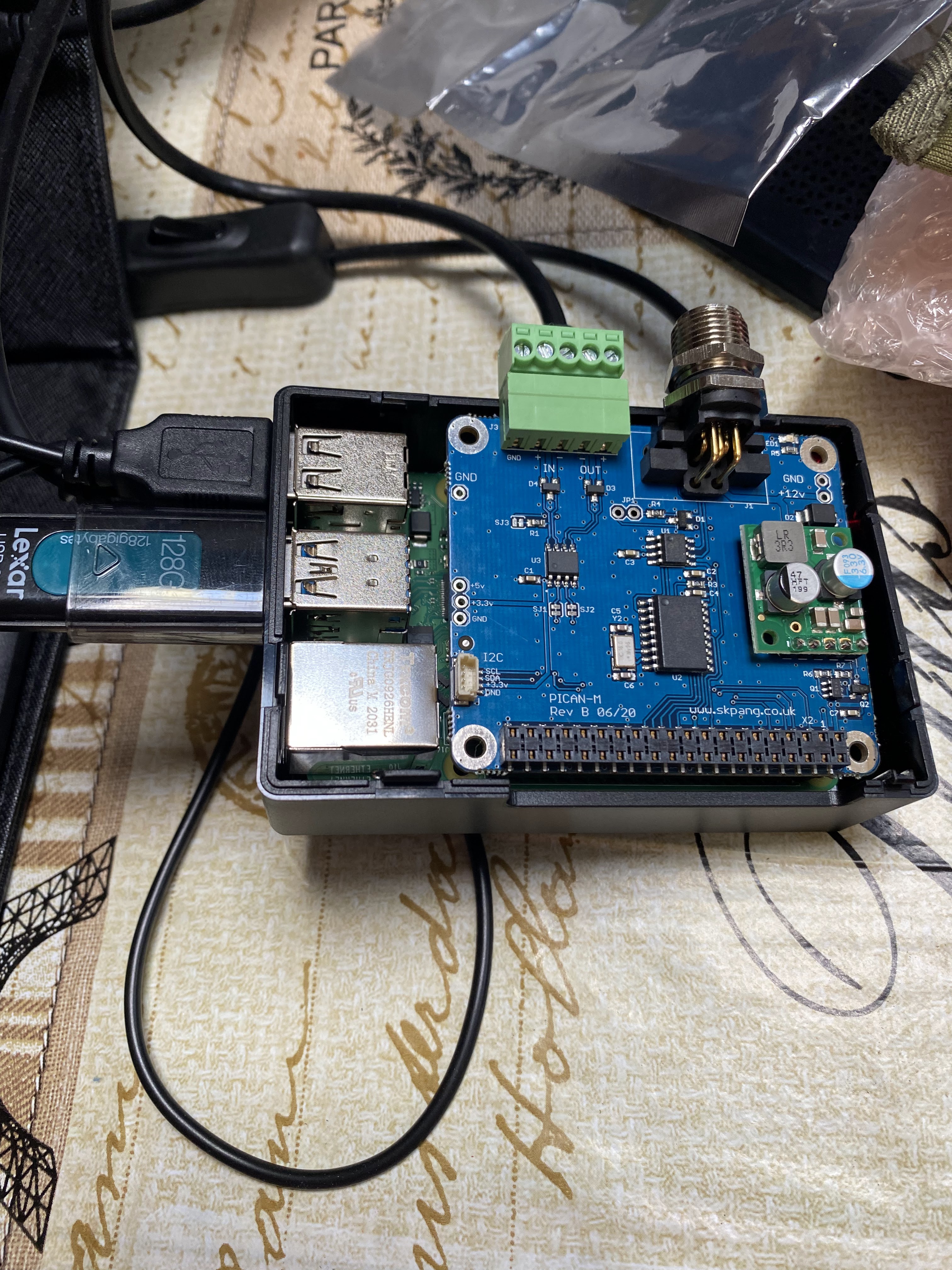
I bought a Raspberry Pi and loaded an OpenCPN pre-built linux on it (easier than it sounds) and also bought a NMEA-2000 interface board built just for the Raspberry Pi. After installing the linux and the new board and connecting it to the boat’s wifi I connected it to the last display device, figured out the IP address given to the device by the boat router, then connected to it using the IP and everything was there! The small Raspberry Pi and the board actually get power from the NMEA network which is very cool. I also discovered I can use my mac to remote-desktop into the Raspberry Pi to manage it (bought a cheap keyboard and small-touch screen to set it up which are very painful to use). This was a very fun project. I have a server running on a 100 dollar device! Note OPenCPN can do a lot more than just this. You can build a full chart-plotter/navigation system.
Also, I think I can use this setup to remotely control the boat’s auto-pilot!!!! This is very neat! I will be able to steer the boat from anywhere using my phone! Stay tuned for this.
The last upgrade was replacing the original Sailor VHF fixed radio. The radio worked fine (and has longer range than the hand-held I usually used) but the power button on the handset was VERY difficult to use, and it didn’t have DSC (Digital Selective Call). DSC lets you use your boat’s MMSI (like a phone number) to be called over the VHF, and also in an emergency can broadcast a distress signal with your position over a 20nm distance. (I’ve received these twice on my hand-held……both were too far away for me to help but it is amazing how well this works.)
I purchased a new Standard Horizon VHF with DSC radio a few months ago and had been waiting for the right time (i.e. moved by a muse) to install it. The Amel has removable cabinets over the chart table, and the VHF radio body was behind there. Easy to take the cabinets out and fairly easy to remove the old radio.
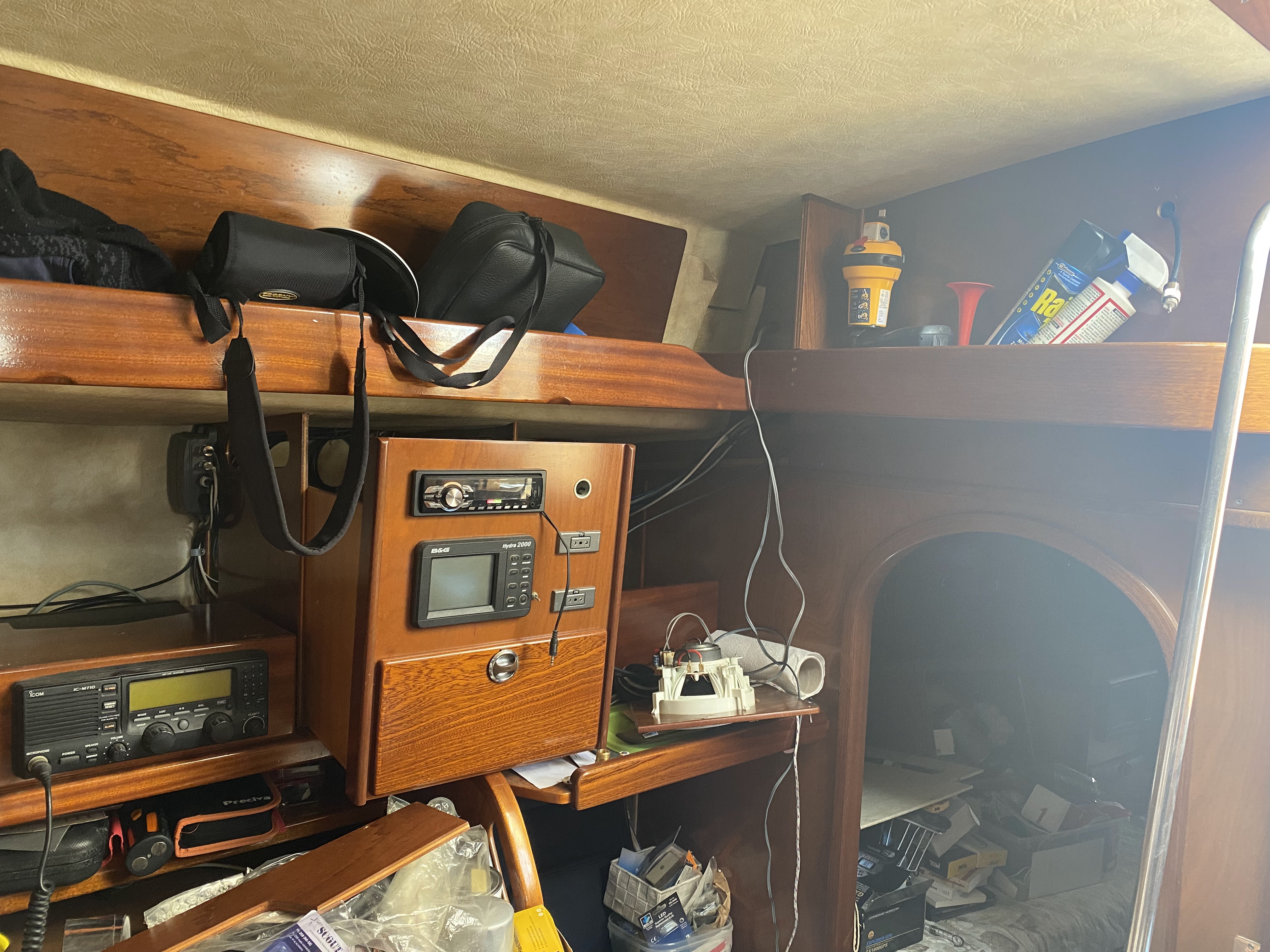
The new radio was going to be installed where the old handset was previously……but I was going to need to extend the VHF antenna cable. I had to make the extension by soldering on 2 male VHF connectors over the shielded cable which is a bit finicky because the cable has a plastic outer layer, then a inner metal shield, then another plastic layer, then a core central wire which becomes the male part of the connector…..anyway I made the cable and it seems to work. Then I had to run power from the old location (all boat equipment runs off of DC….12V DC in this case). The new VHF radio manual warned that if you reverse polarity on the red (positive) and black (negative) connections you will destroy the radio…..and my multi-meter was telling me that the black and red wires I wanted to use were not labelled correctly! Assuming I was doing something wrong and the boat wiring was correct I discovered that the multi-meter cables were not in the right places for the measurement I was making……so the wire colours were correct. So I looked up using a DC Amps/Distance chart and purchased the right size wire (16 AWG) for the DC voltage and current I would be using. (For more entertainment the wire here wasn’t AWG rated so I had to go by square mm for the AWG.)
Again, the hardest part was running the cables. The VHF cable has a fat head and barely fit through the openings. I took another panel off the side of the boat (screwed in so probably meant to be removed) and this made it easier and finally I routed the 3 cables around a corner of the boat….connected everything and it works!
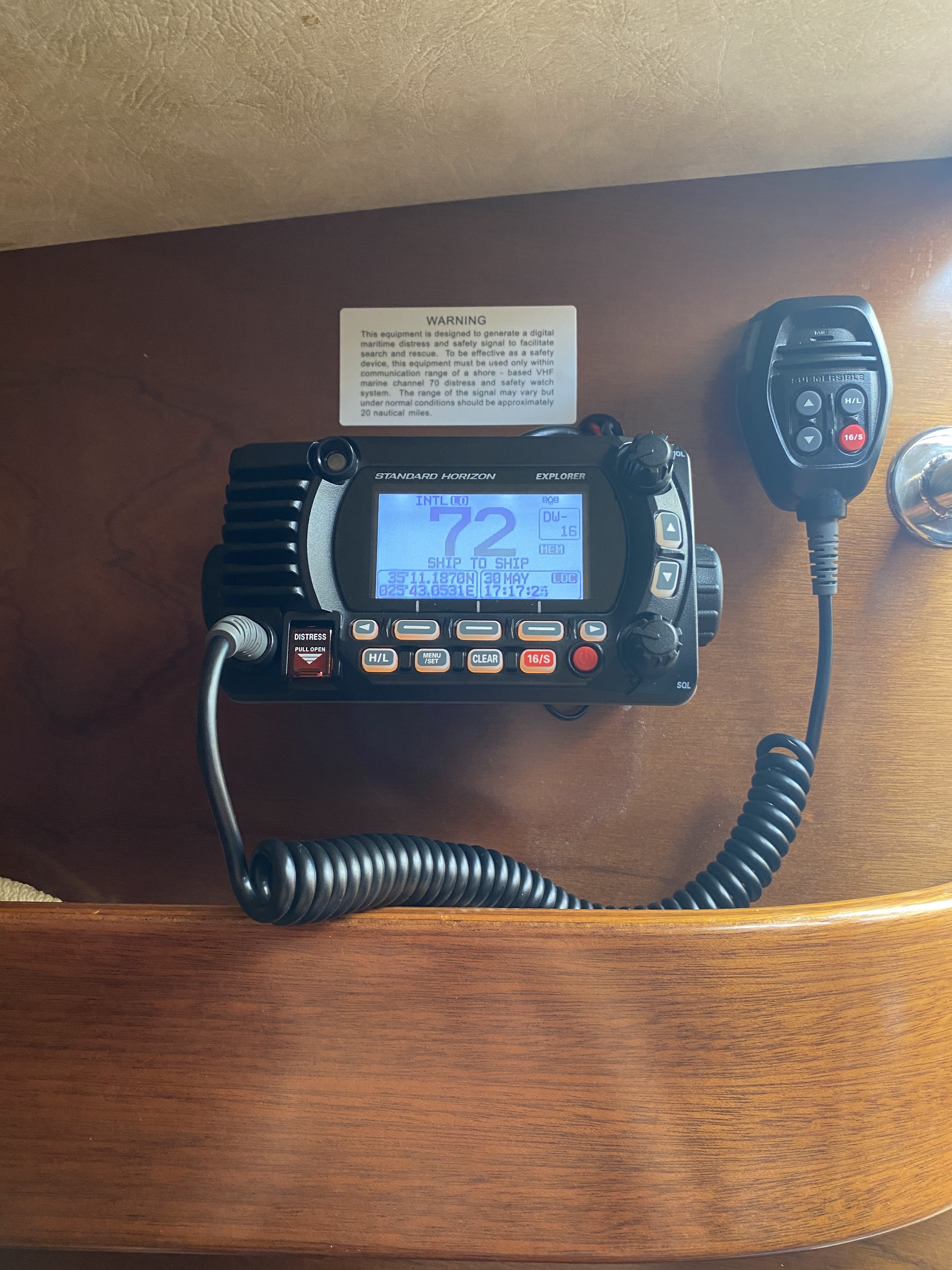
Spruzzo now has a new VHF radio with an additional safety feature. I still need to write up a safety card on what to do in an emergency since we have quite a few different safety systems on the boat. (We both have personal locator beacons in our life-jackets, and we have an EPIRB beacon on the boat that works via satellite, a HF radio that can go hundreds of miles and a bunch of safety flares. Plus an 8 person life-raft.)
This week we are going to have the anodes changed on the rudder and propeller (one of the rudder anodes really degraded this winter. …I’m going to install a Galvanic Isolator this year which stops current flowing over the shore-power ground connection. TLDR this is bad 😉 and have the bottom of the boat scrubbed and then we will begin heading north! The next post will be from a different Greek island. Stay tuned.
 Adventures on Spruzzo
Very impressive!
Sent from my iPad
>
LikeLiked by 1 person
Buy a boat Deet! Gives you a permanent hobby fixing it.
LikeLike